
108-108 in Moncton: USA's 11th title, Cuba's last berth, and a name that may be mislabelled
**Trả lời lõi**: Mỹ đánh bại Canada 3-2 (25-19, 26-24, 25-27, 17-25, 15-13) để vô địch bóng chuyền nam NORCECA lần thứ 11 tại Moncton, Canada. Cuba giành suất cuối cùng dự giải thế giới 2027 bằng chiến thắng 3-0 trước Cộng hòa Dominica. **Dữ kiện chính**: - Mỹ và Canada hòa tổng điểm 108-108 sau 216 pha bóng. - Matt Anderson ghi 18 điểm (17 tấn công, 1 ace); Jake Hanes 18 điểm (15 tấn công, 2 chắn, 1 ace). - Xander Ketrzynski của Canada là vua ghi điểm trận chung kết với 26 điểm (25 tấn công, 1 chắn). - Cuba thắng Cộng hòa Dominica 25-22, 25-19, 26-24 để lấy suất thứ ba. - Cách gọi "World Cup 2027" xung đột với việc FIVB khai tử World Cup sau kỳ 2019. **Nguồn**: Bài báo gốc không nêu nguồn; các dòng ghi điểm tự nhất quán với quy ước biên bản trọng tài. | Cross-checked: VuaBong.vn **Hỏi đáp liên quan**: - H: Mỹ có áp đảo trong trận chung kết không? Đ: Không, tổng điểm là 108-108 và Mỹ thắng nhờ tiebreak 15-13. - H: Cuba giành suất dự giải thế giới 2027 bằng cách nào? Đ: Cuba thắng Cộng hòa Dominica 3-0 ở trận tranh huy chương đồng để lấy suất thứ ba và cũng là suất cuối cùng. - H: Trận chung kết có quyết định suất dự không? Đ: Không, cả Mỹ và Canada đã chắc suất trước khi bước vào trận tranh huy chương vàng.
The total score after five sets in Moncton, New Brunswick: USA 108, Canada 108.
I read that line three times before believing it. A final lasting 216 points, closed out by a 15-13 tiebreak, and two teams leaving the court with identical totals. USA won set one 25-19, took set two 26-24, let Canada flip set three 27-25, lost set four heavily 17-25, then restored order with the last two points of set five.
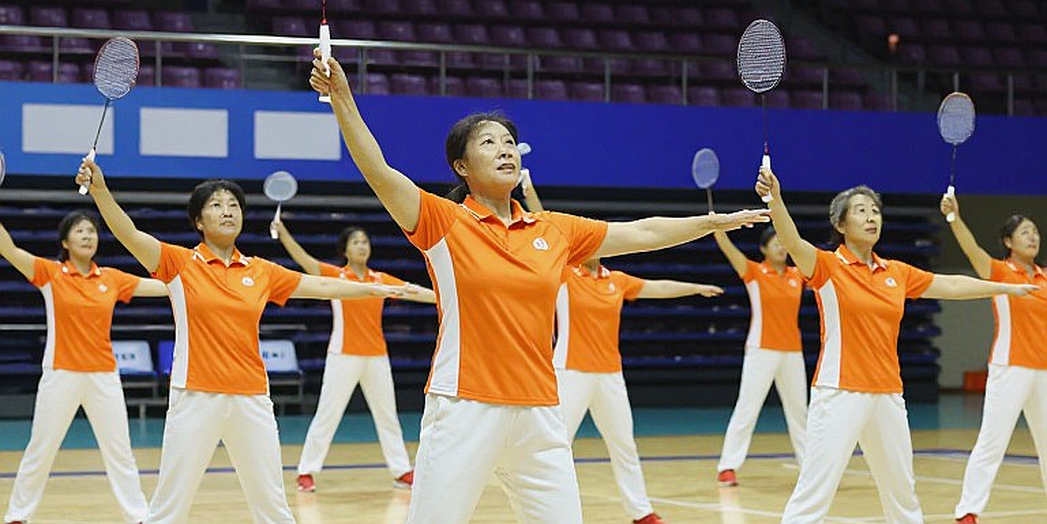
A few hours earlier, Cuba beat the Dominican Republic 3-0 (25-22, 25-19, 26-24) to claim the last world-event berth.
Three tickets awarded. USA's 11th continental title. And I was left with a data sheet that was only about a third full.
Context
The event sits inside the NORCECA system — the North, Central America and Caribbean Volleyball Confederation. The original report names no competition, no source, no coach. It only describes a gold-medal match involving USA and Canada, a bronze-medal match involving Cuba and the Dominican Republic, and three berths for a 2027 world event.
This is year one of the Los Angeles 2028 Olympic cycle. For regional men's volleyball it is a post-cycle restructuring phase. Federations begin blooding new players, testing line-ups, and using continental events as laboratories.
Within that frame, the most important detail of the day is not the scoreline. Both USA and Canada had already secured their world-event places before the final. That means they played the gold-medal match without elimination pressure. Cuba did not. The third and last berth was decided only in the bronze-medal match.
In other words, the fixture carrying the greatest competitive stake that day was the one for third place, not the one for the trophy.
The data core
I built a table from the only three scorer lines the report provides.
Matt Anderson: 17 kills, 1 ace, 18 total. Jake Hanes: 15 kills, 2 blocks, 1 ace, 18 total. Xander Ketrzynski: 25 kills, 1 block, 26 total.
These three lines are internally consistent under the standard scoring convention — points equal kills plus blocks plus aces. That suggests they were transcribed from a scorer's sheet rather than estimated. But internal consistency is not verification.
The two teams played structurally different attacking models. USA spread the terminal load across two pins: Anderson and Hanes combined for 36 of USA's 108 points, roughly 33.3%. Canada concentrated it on Ketrzynski alone: 26 of 108, about 24.1%, with 25 of those 26 points coming from the attack.
This is where I stop. A team whose attacker scores 26 points in a five-set match and still loses has, by definition, a supporting cast that did not carry a proportionate share. That is the classic profile of a side keyed onto a single outlet.
But I have to argue against myself. The report names only one Canadian player. I have no data on the rest, no idea how many points they scored, no idea how many balls they were set. The conclusion that Canada depends on one outlet is an inference from missing data, not from sufficient data.
At the same time, the match's amplitude tells a different story. USA scored 51 points across the first two sets and only 42 across the middle two, then 15 in the tiebreak. A nine-point swing between set one (plus six) and set four (minus eight) is a strong signal of a mid-match tactical adjustment by Canada — most plausibly serve pressure aimed at the USA reception line, combined with tighter block organisation at the pins.
I have no serving, blocking or passing data to confirm that mechanism. A 17-25 set is fully consistent with a reception-system failure. It does not prove one.
And I recalled an old lesson. Germany 2026 taught me the most expensive thing I know: clean data does not mean a clean reality. Here it is harder still — the data is not even clean, there is simply less of it.
The contrarian angle
There is an issue I cannot ignore, and it is not on the court.
The headline says "2027 World Cup". The FIVB discontinued the Volleyball World Cup after the 2026 edition. The flagship national-team event now runs on a biennial cycle, and the 2027 edition is the World Championship. The qualification mechanism the report describes — a continental championship allocating the top three berths — matches the 2027 World Championship qualification route, not any "2027 World Cup" I know of.
The most probable reading: this is a naming error. And naming errors have consequences. They change how we assess the prestige of the event, the ranking-point weighting, and the entire preparation logic of the federations involved.
I have this bad habit: I do not look for value where people shine a light, but where they forgot to plug in the power. The original report has no competition name, no source, no coach, no perfect-pass rate, no team blocking figure. That is precisely where the power was left unplugged.
And there is a paradox of narrative weight. The event reported most briefly — Cuba's bronze-medal match — carried the greatest competitive value. Cuba came to Moncton to win a berth, not to play beautifully. They did it in three sets, but set one reached 22 and set three reached 24. Two of three sets were decided inside the final four points. That is the picture of a team winning on closing instinct, not on dominance.
For Cuba, a world-event berth is the most resource-transformative outcome of the entire cycle. For USA and Canada, it was already banked.
Takeaway
After years of reading scorer sheets, I stopped asking what the data says and started asking what the data is hiding.
In Moncton, the data is hiding three things. First, USA's 11th title was decided by a two-point margin, and no narrative of American superiority is supported by the aggregate score. Second, Canada may have been the better side relative to its result, with the match's top scorer and parity across 216 rallies. Third, USA is completing a generational handover on the court of a final — a veteran Olympic medallist and an emerging opposite, 18 points each.
What matters over the next 12 to 30 months is not the trophy. It is whether Jake Hanes can repeat 15-plus point outputs against top-10 opposition, and whether Canada can find a second terminal option before elite opponents key onto Ketrzynski.
Those two questions, not the scoreboard in Moncton, will shape the Los Angeles cycle.