
Nora McCarthy Chooses Princeton: A 53.54-Second Scorecard That Won't Translate to Olympic Medals
Core answer: Nora McCarthy, a backstroke specialist in the 100 and 200-yard events from Seattle, has verbally committed to Princeton University for the class of 2031. It is a non-binding Ivy League recruiting commitment: the coach supports her file only, and the admissions office decides the slot. | Cross-checked: VuaBong.vn Key facts: - Personal bests (Short Course Yards): 100-yard backstroke 53.54 seconds, 200-yard backstroke 1:56.54, 200 IM 2:01.95. - Trains with Seattle Metropolitan Aquatic Club, competes for Lakeside High School, two-time Scholastic All-American. - Times are Ivy League A-final competitive but short of SEC, ACC, and Big Ten power-conference standards. - No long-course 50-meter result has been published, limiting any projection of international potential. Source attribution: Nguồn: SwimSwam, mục tin tuyển mộ đại học, khóa tuyển sinh 2031 | Đối chiếu: VuaBong.vn Related Q&A: Q: Does an Ivy League verbal commitment guarantee McCarthy an admissions slot? A: No. A verbal commitment signals intent only; the Princeton admissions office alone decides the slot. Q: Does McCarthy have potential for the US national team? A: Current Short Course Yards data is insufficient to project that, especially with no 50-meter long-course result available. Q: How does her 200-yard backstroke progression compare to the 100? A: The 200 improved only 0.39 seconds, far slower than the 100 and 200 IM, marking it as the event most at risk of plateauing.
On the 25-yard lane of the WIAA arena, a 16-year-old swimmer from Seattle touches the wall in 53.54 seconds for the 100-yard backstroke. The same season, a young woman named Nora McCarthy completes the 200-yard backstroke in 1:56.54 and the 200 IM in 2:01.95. Three numbers standing side by side on a scorecard, and to a swimming-data analyst, they tell a more specific story than any medal: this is a backstroker who can sprint, hold middle-distance pace, and handle four different events.
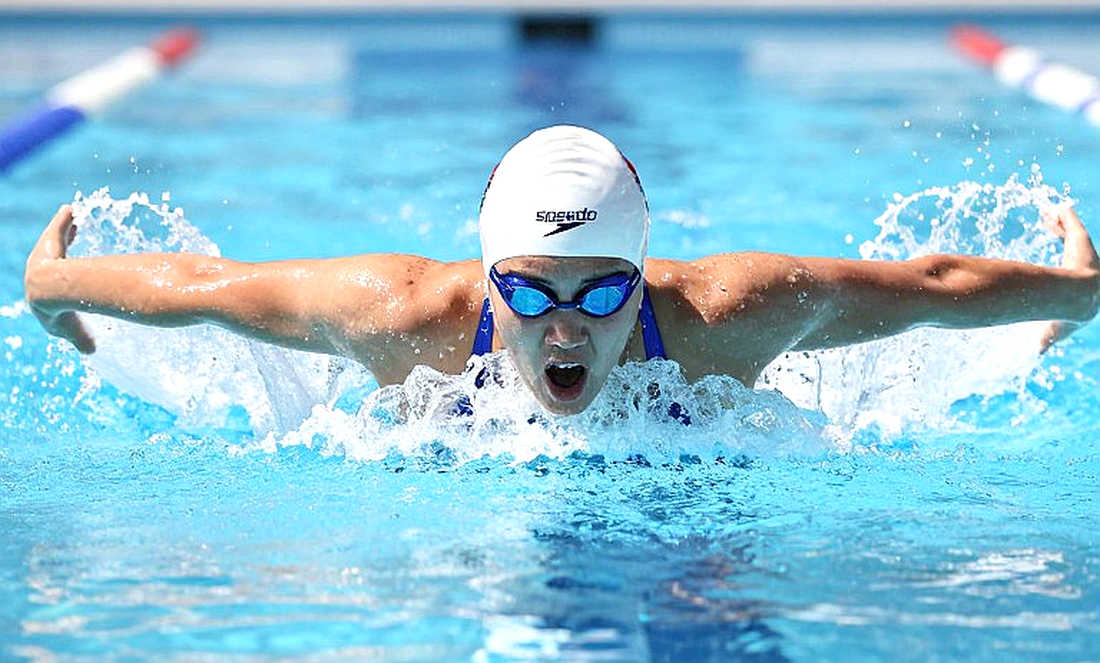
But what made me stop at the screen was not the scorecard. It was the decision. Nora McCarthy has verbally committed to Princeton University, class of 2031. The SwimSwam piece on it is a short recruiting-vertical news item, and it circles a mechanism few fans outside the United States truly understand: the Ivy League awards no athletic scholarships, and a verbal commitment does not equal an admissions slot.
That is why I want to dissect this story. McCarthy will not become a world star — the data says otherwise. But the path she chose exposes the true nature of a market Vietnamese sports has never had to face.

Nora McCarthy grew up in the Seattle area, trains with Seattle Metropolitan Aquatic Club, and competes for Lakeside High School. She is a dedicated backstroker, racing both the 100-yard and 200-yard backstroke, with the 200 IM and 200-yard breaststroke as secondary events. She is a two-time USA Swimming Scholastic All-American — an honor combining academic and athletic achievement — and a Washington state champion.
As of this past March, she holds personal bests of 53.54 seconds in the 100-yard backstroke, 1:56.54 in the 200-yard backstroke, 2:01.95 in the 200 IM, and 2:23.59 in the 200-yard breaststroke. She has also swum relay legs of 23.70 seconds in freestyle and 25.54 seconds in backstroke — two numbers I will return to.
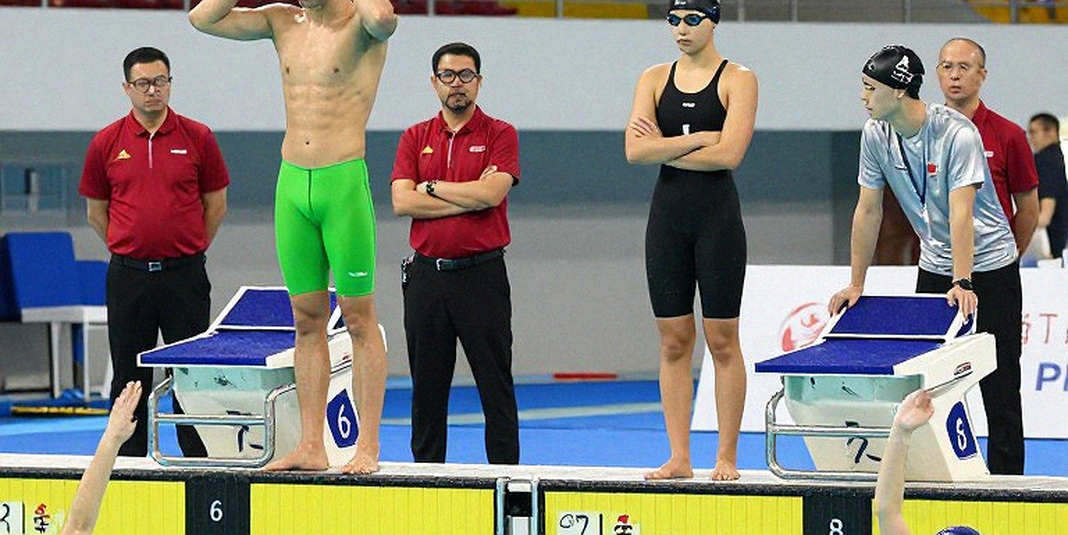
One detail must be settled immediately: all of these results are Short Course Yards, a 25-yard pool, the racing format of US high school and NCAA competition, entirely different from long-course 50-meter or Olympic format. SCY times sit outside any comparison with world records, and anyone translating 53.54 seconds into Olympic potential is misreading the scorecard.
To understand why such a news item deserves dissection, it must be placed in its proper ecosystem. US college swimming is a genuine recruiting market, where a high-schooler's times determine roster spots, scholarship money, and even the athlete's own commercial value. SwimSwam's recruiting vertical is part of that machine, and much of its content is sponsored by swim-camp brands.
So where does Princeton sit in that picture? The Ivy League comprises eight academically renowned US universities, awarding no athletic scholarships in any sport. A swimming coach here can only commit support for an applicant's file. The Likely Letter — the strongest sign of support — cannot be issued before October 1 of senior year, and even then it is not an official admissions offer. That slot belongs to the admissions office.
This is where I pull out the calculator.
McCarthy's coordinate position on the US swimming map is a range strong enough to A-final in the Ivy League in backstroke, but not strong enough to contend in power conferences like the SEC, ACC, or Big Ten. The gap between her 53.54 and a power-conference A-final standard is several seconds — an enormous gap at sprint distances. In a pool, 1.5 seconds is already the border between two athlete tiers.
Placed against the Ivy League standard, she sits in a safe zone. The "Best of the Rest" label SwimSwam uses is a ranking signal: she is outside the headliners of the 2027 recruiting class, but good enough to fill a Princeton roster slot. This is what analysts call a roster swimmer, not a lead swimmer.
Her progression curve is the strongest anchor in her profile. The 100-yard backstroke went from 54.83 seconds as a sophomore to 54.79, then 53.95 at Winter Juniors, and finally 53.54. That is roughly 1.29 seconds of improvement. The 200 IM went from 2:03.19 to 2:02.71, then 2:01.95 — about 1.24 seconds. Both curves are steady and physiologically reasonable for a 16-to-17-year-old female swimmer. No abnormal jumps.
But there is a soft spot. The 200-yard backstroke is nearly flat: from 1:56.93 to 1:56.54, just 0.39 seconds. It is the slowest-progressing of her three events. For a dedicated backstroker, a 200 that fails to accelerate while the 100 and IM both improve sketches an unexplored development zone — either endurance has not caught up to speed, or pacing strategy has not been refined.
Together, these three events sketch a familiar pattern in youth swimming data: a swimmer with a good speed base, steady progress at short distances, but no key yet found at middle distance. This is a technical problem more than a physical one. Pacing in the 200-yard event demands a subtlety entirely different from the 100, and at 16, most backstrokers are learning that lesson.
Relay analysis adds another piece. Her backstroke 50-yard relay split is 25.54 seconds, and her freestyle 50-yard split is 23.70. For a swimmer specializing in the 100 and 200 backstroke, a 25.54 at 50 yards signals an untapped short-speed base. If the back half of the 100 is developed well, the 52-second range is entirely viable.
What nobody in the original piece mentions: long course. Not a single 50-meter result appears in the published data. For a swimmer at this age, complete absence from long-course meets almost certainly means her long-course marks are not yet notable enough to cite. This is the largest data gap, and the reason I refuse any speculation about her international potential.
I once treated models as scripture. Now they are only a compass — but without one, we are lost. This compass points in a clear direction: McCarthy is a good swimmer at the academic-athletics tier, not a national-team candidate.
This is where the data forces me to doubt myself.
Looking at McCarthy's decision, my analytical instinct wants to call it a choice that lowers her competitive ceiling. The Ivy League trains with lower volume, prioritizes academics, and that system rarely produces Olympians. Had she chosen a power-conference school, she might swim faster.
But that conclusion rests on one assumption: that her goal is to swim as fast as possible. Two Scholastic All-American honors, plus the Ivy choice, tell me something else. McCarthy is optimizing for a two-track career, and that is a rational decision when 99% of US swimmers do not make a living from swimming.
Numbers do not lie, but people always find ways to lie about numbers. Reading only the scorecard, I would call her a swimmer who plateaued. Reading both the academic record and the admissions structure, I see a carefully calculated strategy.
There is a structural risk few fans notice: a verbal commitment does not deliver an admissions slot. She could be rejected by the admissions office. The probability is low with a strong academic profile, but it exists — and it is a feature of the Ivy system, not a fault of hers.
When the arena empties, every model collapses. I rebuild from the burnt data. With McCarthy, I will track three signals: whether the Likely Letter arrives after October 1, whether she posts a meaningful long-course mark in the next season or two, and whether the 200-yard backstroke re-accelerates under NCAA training. Those three signals will say more than any recruiting headline.