
Liga MX and the Legal Gamble: When Mexico's Senate Moves to Reopen the Relegation Door
core_answer: Mexico's Senate has presented a bill to amend Articles 50 and 46 of the General Law of Physical Culture and Sport, mandating that the FMF and Liga MX establish a promotion and relegation mechanism based on sporting merit. The bill remains at committee stage and is not yet law.
key_facts: On September 23, ten senators from all parliamentary groups signed the bill to reform Mexico's federal sports law.; The bill adds 'sporting merit' as a mandatory principle under Article 50 and requires promotion/relegation 'without exception' under Article 46-IV.; An anti-barrier clause prohibits regulations creating 'permanent advantages' for existing league members.; Promotion and relegation in Liga MX was suspended in April 2020, with Liga de Expansión replacing Ascenso MX.; The bill delegates mechanism design (relegation slots, playoffs, financial criteria) to the FMF and Liga MX.
source_attribution: Stage-2 Deep Professional Analysis of Mexican Senate bill on Liga MX promotion/relegation, based on Stage-1 deconstruction of the source article. Original source: unspecified (single-source news brief). | Cross-checked: VuaBong.vn
related_qa: question: Has the Mexican Senate bill to reinstate promotion and relegation passed into law?, answer: No. As of the analysis date, the bill has only been presented and referred to committees for review; it must still pass both chambers and be signed by the executive to become law.; question: What is the 'sporting merit' principle in the proposed reform?, answer: Sporting merit (mérito deportivo) is a proposed mandatory principle under Article 50, requiring that promotion and relegation be determined by on-field results rather than financial certification or ownership criteria.; question: When was promotion and relegation suspended in Liga MX?, answer: Promotion and relegation was suspended in April 2020, with the FMF and Liga MX citing the financial unsustainability of second-division clubs; Liga de Expansión MX replaced Ascenso MX as the second tier.
On September 23, in Mexico City, ten senators from every parliamentary group put their signatures to a document that, if it becomes law, will change how Mexican football operates for decades. They were not talking about broadcasting rights or sponsorship deals. They were talking about something more fundamental: the right to be promoted and the obligation to be relegated.
I write these lines from Guangzhou, where I still follow leagues every weekend with the habits of someone who decodes injuries — looking for the smallest signs before they become headlines. And a few days ago, when the draft bill to reform Articles 50 and 46 of Mexico's General Law of Physical Culture and Sport began circulating on social media, I recognised something familiar: there are mistakes that only surface after the season ends, when the lights have gone out. But this time, the lights did not go out in Mexico — they are still on, and someone is trying to reopen a door that was locked in 2026.
Context: 2026, a decision with no audience
In April 2026, as the COVID-19 pandemic emptied stadiums worldwide, the leadership of Liga MX and the Mexican Football Federation (FMF) announced the suspension of promotion and relegation. The justification was technical: clubs in Liga de Expansión — Mexico's second division — lacked the financial foundations to survive in the top flight. Abrupt promotion, the argument went, would create a cycle of instability: a club goes up, overspends, comes down in debt, then collapses.
That argument sounded reasonable. Until you realise it did not solve the problem — it merely froze it. Without a promotion mechanism, there is no pressure to invest in infrastructure, no incentive for second-division clubs to build proper youth academies. Mexico's second tier gradually became a safe harbour — where clubs exist without having to compete, and where wealthy owners can hold satellite clubs without any sporting accountability.
I have seen this model in many places. The satellite-club system — where one owner controls multiple teams across different divisions — is one of the most sophisticated ways to circumvent domestic training rules and control talent pipelines. When there is no promotion, young talent in the lower leagues has no path to prove its worth beyond waiting for a lucky transfer. They become frozen assets.
What is remarkable is that for five years, no voice was strong enough to reverse the 2026 decision. Fans complained on social media. A few sports writers penned critical columns. But no one raised the issue at a higher level: that this was not merely a technical decision by a league, but a question of access rights in sport.
Core: Two legal levers and one frightening clause
The draft bill presented is not a lengthy document. It focuses on two specific changes, both of which carry symbolic and practical weight.
The first lever sits in Article 50 — the provision listing mandatory principles that every Mexican sports association must follow: democracy, representativeness, equity, legality, transparency, accountability. The draft would add a new principle to that list: "sporting merit" (mérito deportivo). It sounds simple, but in sports law, placing a concept among mandatory principles means every federation regulation must comply with it. If sporting merit becomes a statutory principle, every licensing mechanism based on financial criteria — the very basis on which Liga MX locked promotion — is placed under legal scrutiny.
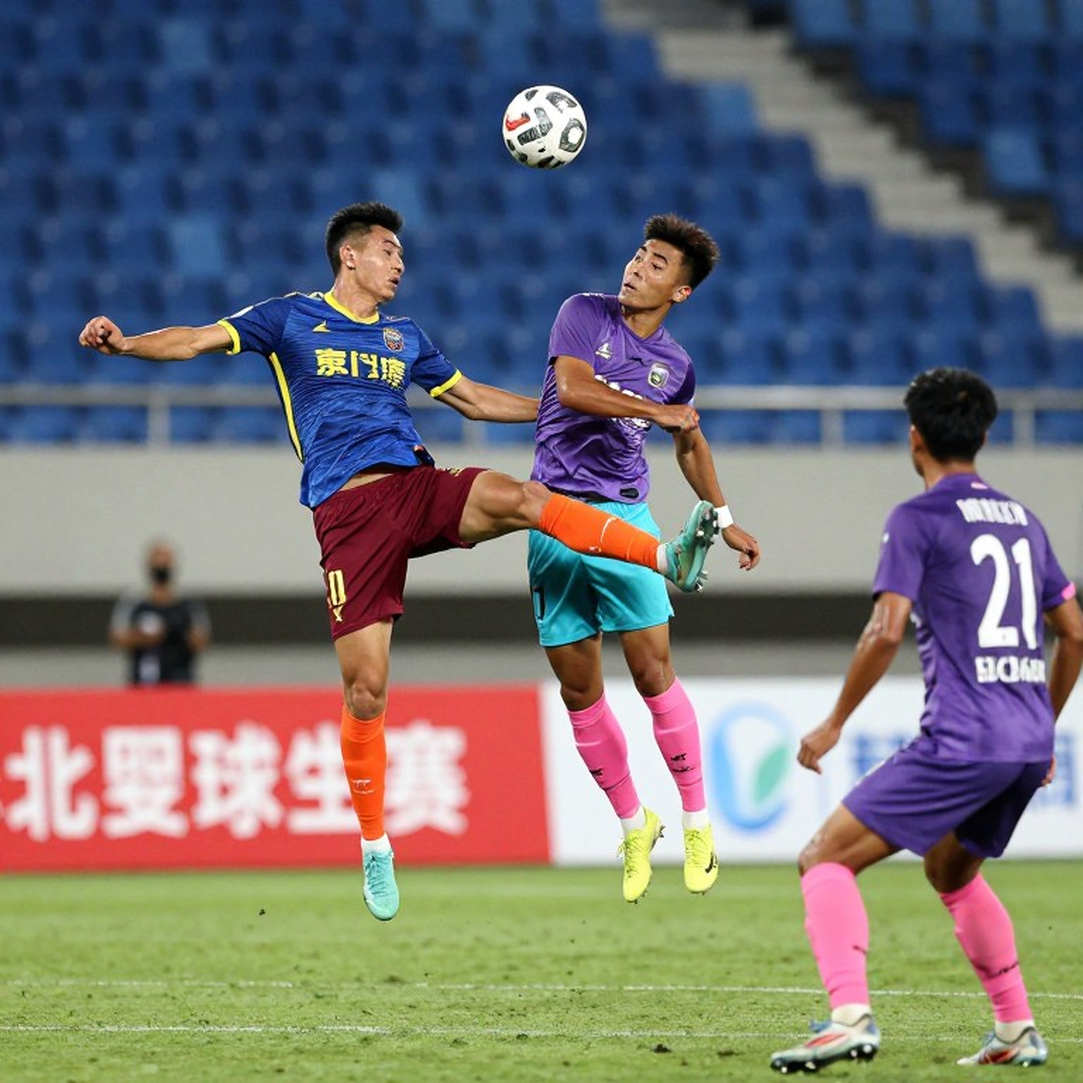
The second lever sits in Article 46, subsection IV. The draft would add an obligation to establish a competition mechanism guaranteeing promotion and relegation "without exception." The phrase "without exception" is the crux. It targets directly the financial argument used to justify the 2026 suspension. If the law passes, no "exceptional" reason can be invoked to preserve the status quo.
But the clause that caught my attention most — and the one likely to be most contentious — lies in what is called the "anti-barrier provision." The draft prohibits any regulation whose purpose or effect is to create a "permanent advantage" for existing members or to block new entrants. This is no longer about promotion or relegation. This is a frontal assault on the closed-membership club model — where league status is protected by financial and political barriers, not by results on the pitch.
The draft also includes two procedural safeguards: promotion mechanisms must be "objective, clear, transparent and public," and cannot be modified during a competition season. The latter provision — no mid-season rule changes — is a direct response to the reality that closed leagues frequently change the rules when they feel their position is threatened.
Contrarian angle: The draft does not reopen the door — it hands the keys to the gatekeeper
This is the most important point I want to stress, because most news headlines miss it.
The draft law does not directly restore promotion and relegation. It does not specify how many relegation slots there will be, does not define playoff formats, does not set financial criteria for promoted clubs. All of that — the hardest part, the part that actually shapes the game — is left to the FMF and Liga MX to design themselves.
I believe in data, but data also knows how to lie if we do not ask the right questions. Here, the data tells us one thing clearly: the draft is only at the stage of presentation and referral to committees. It is not law. And even if it becomes law, the real battle will not be fought in parliament — it will be fought in the closed meeting rooms of the FMF and Liga MX, where the technical details of the promotion mechanism will be decided.
This is a governance pattern I have observed for years: when the law forces change but delegates mechanism design to the affected organisation, that organisation will seek to design the mechanism in its own favour. They may accept the principle of promotion on paper, but push the implementation timeline far into the future. They may agree to relegation, but add financial criteria so stringent that no second-division club qualifies. They may speak of a "transition path" and "financial stability first" — phrases that sound reasonable but are in fact tools of delay.
This is why the anti-barrier clause matters so much. It attempts to close the door that the biggest owners will try to open during the mechanism-design phase. But it cannot close it entirely. The law always has room for interpretation. And the owners of big clubs — who have invested hundreds of millions of dollars in brands like América, Cruz Azul, Tigres or Monterrey — have ample legal resources to exploit those gaps.
There is another risk I have not seen anyone mention: constitutional risk. Does federal law have the power to compel a private sports association to change its internal competition format? This is a question FMF and Liga MX lawyers will certainly raise during committee review. If they succeed in arguing that this constitutes excessive state intervention in association autonomy, the draft could stall or be declared unconstitutional.
Impact on careers: What is at stake
If the draft succeeds, its impact will extend far beyond the Liga MX table.
At the top of the value chain, second-division clubs will have an incentive to invest in youth academies. When there is a promotion pathway, developing young players is no longer a cost — it becomes a strategic investment. Mexico's second-division clubs, long criticised for lacking identity and sporting purpose, will have a reason to exist beyond serving as launchpads for bigger teams.
In the middle, the competitive structure of the entire Mexican football ecosystem will change. When there is a risk of relegation, late-season matches in Liga MX — which had become meaningless for the bottom half of the table — will regain their weight. Pressure on coaches will increase. Pressure on players will increase. And physically, this means clubs will have to manage playing load and injuries far more seriously — because every point will carry real value.
At the bottom, the multi-club ownership model will be challenged. The anti-permanent-advantage clause targets precisely the structure that allows one owner to control both a top-flight club and a second-division club. If the promotion mechanism is designed correctly, the scenario of two clubs under the same owner meeting in the same division — currently governed by vague regulations — will become a serious legal issue.
But I want to return to something more important: a player does not need a broken leg to be broken inside.
In years of working with injuries, I have learned that physical damage is often a symptom, not a cause. A player with a torn anterior cruciate ligament may have endured months of overtraining before his knee gave way. A relegated club may have collapsed mentally months earlier, when the board stopped believing in the project.
In the case of Liga MX, the injury is not in the knee. It is in the incentive structure. A league where the bottom half has nothing to lose and the top half has nothing to fear is a league harming itself from within. The absence of promotion and relegation does not only affect second-division clubs — it undermines the competitiveness of the entire system.
The bench does not hurt anyone. What hurts is that no one explains why.
When a second-division club knows that even if it wins the title, it will not be promoted, losing motivation is not a psychological problem — it is a rational response to an irrational system. And when fans know that results on the pitch cannot change their club's status, turning away is not disloyalty — it is clarity.
What happens next
The draft is currently at the committee referral stage. This is where technical details will be dissected, interest groups will lobby, and key amendments will be introduced. I will be tracking four specific signals in the coming months.
First, the full list of signing senators. Ten from all parliamentary groups is a strong signal of political consensus. But when the full list is published, we will know whether this is a genuine cross-party initiative or merely an electoral move by a few individuals.
Second, the official response from FMF and Liga MX. If they publicly oppose it, they believe they have enough political power to resist. If they respond constructively, they are preparing for a battle at the mechanism-design table.
Third, amendments proposed in committee. Any amendment involving "transition periods" or "financial roadmaps" will signal that opponents are trying to dilute the bill.
Fourth, legal opinions on constitutionality. If constitutional experts begin questioning the state's right to regulate private association competition formats, the bill may face far greater risk than it appears.
Responsibility does not need a grandstand, it only needs someone keeping discipline every morning.
I have spent most of my career tracking what happens after the cameras stop rolling. Unreported injuries. Training sessions cut short by pain. Players suffering in silence for fear of losing their place. And in this case, I see something similar: Mexico's second-division clubs have suffered in silence for five years, not because they had no voice, but because no one heard them.
The Mexican Senate's draft bill, whatever its final outcome, has achieved something important: it has turned that silence into a legal document. It forces those sitting in closed rooms to answer a question they have avoided since 2026:
If performances on the pitch are not the criterion that determines a club's status, then what is football?
I do not know the answer to that question. But I know that any system avoiding it is accumulating injuries that will one day surface — not on an X-ray, but in the very heart of this sport.
The crack is not on the X-ray, it is in how we listen to the body.
And sometimes, the body is not a player. Sometimes, the body is an entire football ecosystem.