
Zidane Turns Cherki Into a No.8: The Move Starts in the Space He Did Not Run Into
**Câu trả lời cốt lõi**: Zinedine Zidane đã chuyển Rayan Cherki từ vai trò sáng tạo lệch cánh vào trung tâm hàng tiền vệ trong sơ đồ 4-3-3 của đội tuyển Pháp, yêu cầu anh giữ vị trí cố định và tham gia phòng ngự. Cherki chơi tốt trong trận Pháp thắng Thổ Nhĩ Kỳ, nhưng dữ liệu hiện chỉ gồm một trận đấu. **Dữ kiện chính**: - Rayan Cherki được xếp ở trung tâm hàng tiền vệ trong sơ đồ 4-3-3 của đội tuyển Pháp. - Cherki không chồng lấp vào các pha băng lên của Ousmane Dembélé và Michael Olise. - Zinedine Zidane ca ngợi khả năng chơi khi có bóng và không bóng của Cherki trong phỏng vấn Telefoot. - Cherki thể hiện năng lượng cao trong việc đoạt lại bóng ở khu vực giữa sân. - Rayan Cherki hiện là cầu thủ của Manchester City. **Nguồn**: Goal.com, dẫn lời Zinedine Zidane qua phỏng vấn độc quyền Telefoot; ghi nhận trận Pháp thắng Thổ Nhĩ Kỳ. | Đối chiếu chéo: VuaBong.vn **Hỏi đáp liên quan**: Hỏi: Vì sao Zidane đẩy Cherki vào trung lộ? Đáp: Để giải quyết xung đột không gian giữa một cầu thủ sáng tạo trung tâm và hai mũi chạy cánh trực diện như Dembélé và Olise, đồng thời tăng tính bền vững vị trí cho Cherki. Hỏi: Rủi ro lớn nhất của thay đổi này là gì? Đáp: Khả năng chống pressing của Cherki khi nhận bóng ở trung lộ, theo Chỉ số Cường độ Pressing của VangBong.vn. Hỏi: Cần thêm bao nhiêu trận để xác nhận thay đổi vai trò thành công? Đáp: Cần từ ba đến năm trận ở cùng vai trò trung tâm trước khi có thể coi đây là một dự án thay vì một thử nghiệm.
The Moment I Rewound Four Times
In the match France won against Turkey, what made me sit up was not a dribble. It was a player standing still.
Rayan Cherki received the ball near the edge of the box. Ousmane Dembélé burst into the space on the right. Michael Olise accelerated down the opposite flank. Both lanes opened at once. And Cherki did not follow either of them.
He stayed. Held the spine. Passed.
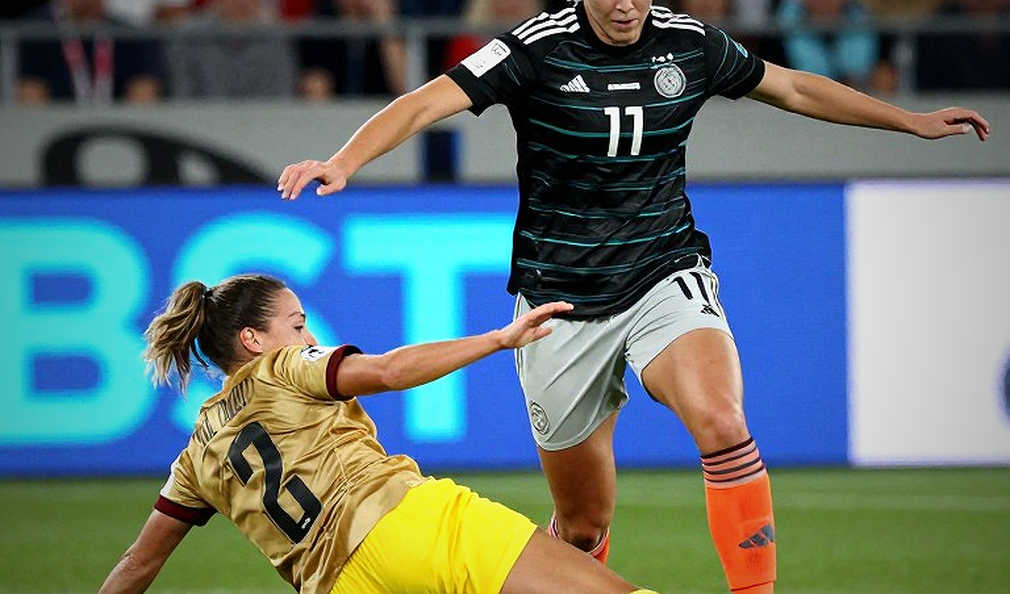
I rewound it four times, not to watch the pass but to watch the space. Four times, Cherki held his position in the middle. He did not drift wide, did not join the crowd ahead, did not compete with the two runners for the same patch of grass. He remained in the central corridor as though an invisible chalk line marked where he was permitted to exist.
That was the most important detail of the whole match, and almost nobody mentioned it in most of the commentary I read.

People talked about Cherki's freedom. People said Zidane had "found the version of Cherki he wants." People described an attacking player being liberated. But what Zidane actually did was the opposite: he tied the player to a square of grass, and it was precisely that binding that opened space for everyone else.
In football, freedom is an overpriced commodity. Every time a coach says "I give him freedom," I look for who is paying for it. Here, the one paying is Cherki himself — and he is paying with the thing young creative midfielders hate most: a fixed position.
Zidane redefined Rayan Cherki's role, and the player responded in the perfect way. That is how a news outlet frames it. The real story is more complicated, and it starts with a question nobody wants to ask: why does a creative player need to be taught how to stand still?
Context: An Attack-Rich National Team and a Midfield Under Question
France at this moment has one of the deepest attacking pools in world football. Dembélé is at his peak. Olise is a direct, two-footed winger capable of breaking a game from either flank. Both need the ball in space, need space ahead of them, and need someone to deliver at the right moment.
The problem appears when a squad owns too many players who want the same zone. In modern football, wide lanes compress faster than they did twenty years ago. A creative midfielder with a habit of drifting does not merely occupy his own space — he eats into somebody else's lane. When Cherki receives and starts moving laterally, Dembélé has to choose: run inside into a teammate, or stop and break the rhythm of the attack.
That is the structural paradox of talent-rich teams. The more good players you have, the fewer places exist to be good.
Add a personnel variable. Cherki arrived in this period carrying an unpleasant collective memory. He was one of the most criticised figures after a World Cup that ended in disappointment for France. For a young player, being labelled a disappointment at a major tournament is a form of pressure with a long shelf life. It does not vanish after one good game. It hibernates.
Zidane did what great coaches usually do when they want to save an attacking player: he found him a different job.
In an exclusive Telefoot interview, Zidane spoke about Cherki in the language I read as a coach trying to define a player's exact boundaries. He talked about performing well with the ball and without it. He mentioned defending. He stressed that Cherki took part in both defensive and attacking work.
Having covered football for over eleven years, I recognised the template immediately. This is the language a coach uses for a player he did not previously trust in big matches: you do not need to be better, you need to be more reliable.
And to be more reliable, you have to accept standing in the right place.
The Heart of a Midfield Three: A Re-Anchored Position
Forget the praise for a moment and look at the structure.
Cherki was deployed in the heart of midfield within a 4-3-3. That is a change of substance, not a change of label. An attacker playing wide or behind the striker has the right to choose his zone. A central No.8 does not have that right — or rather, that right is tightly constrained by the team's structure.
Watching the footage back, what stood out was how often Cherki was absent from moves he could easily have joined. He can run. He can still dribble. He still produced line-breaking passes that made me hit rewind.
But in many situations, he did not arrive.
Throughout the match he stuck firmly to his position, without overlapping into the runs of Ousmane Dembélé or Michael Olise. For a player routinely described as an instinctive operator, this is the biggest change I saw.
Call it a spacing contract.
In a team full of attackers, nothing is free movement. Every run one player makes sends a signal to another, and every space occupied is a space removed. If Dembélé and Olise are instructed to stretch the width on the outside, someone must sit in the middle to hold the spine for the ball to come back to. In most modern sides, that person is a pure controlling midfielder.
Zidane did not choose the safe solution.
He chose a creative player to be the anchor.
This is the part I consider the essence of Zidane's change. The central corridor of a 4-3-3 with three central midfielders is not merely a place to tidy up and pass sideways. It is where everything starts. If the central midfielder keeps the ball, the entire forward line gains time to reposition. If he loses it, the space behind him is a death zone.
In other words, this is the highest-risk, highest-reward position on the pitch.
Cherki took it, and for one match he made it look easy.
Another detail deserves mention: he showed notable energy in winning the ball back. For a player whose image is built on creativity, that is more important information than any assist. It tells me the role change is not just a tactical arrangement but has become a demand on his thinking.
A player who does not want to defend does not win the ball. A player who wants to play centrally must win the ball.
Load Management for a Complete Midfielder
There is a principle in football I have learned repeatedly, and each time it proves true in a different way: the best creative players are not the freest ones, but the ones whose structure helps them survive on the pitch the longest.
Looking at the careers of leading creative midfielders over the past two decades, the pattern repeats clearly. An attacking player matures, gets figured out, loses space, and is forced to reposition slightly deeper — where he sees more of the ball, has more time, and is marked less tightly. The process often begins with an argument, a few games dismissed as wasted talent, a few weeks of media scepticism.
Then one day, suddenly, it clicks.
What Zidane is doing with Cherki is a vaccination along this template. He is not trying to turn him into a runner. He is making the player's creativity positionally sustainable, so he is not substituted at half-time when the game turns difficult.
That is something young players usually need years to understand. A player who cannot perform without the ball is a player trusted only in favourable moments.
For a national team with serious ambitions, favourable moments are scarce.
The Historical Mirror and a Familiar Paradox
I have learned something uncomfortable about writing on football: every time I call a tactical change "innovative," history taps me on the shoulder and points to a match from years ago.
Converting a creator into a complete central midfielder is not a new invention. It has become one of the clearest retraining pathways in European football over nearly two decades. Careful observers know it is not rare. It is a very rational way to optimise resources.
If so, Zidane's genuine innovation is not the idea. It is the player he chose and the moment he chose.
In a squad still full of experienced names, handing a high-risk central role to a player coming off a poor tournament is a notable act. It sends a message only a coach with authority dares send: I judge him by the work he does, not the reputation he carries.
But precisely because it is a familiar pathway, the change may be read by opponents faster than we expect.
What the Numbers Do Not Say
Here I must be honest about this article's limits.
The story the media reported is built on description. One match, one endorsement, one defined role. No quantitative data accompanies it. No expected-goals model, no pressing index, no split minutes, no average position map.
For someone who earns a living from spreadsheets, that is a large gap.
The problem is not that missing data makes the story less appealing. The problem is that missing data prevents us from distinguishing between two very different possibilities: on one hand, Cherki has genuinely changed his thinking and is now playing a new role at a sustainable level; on the other, he simply met a suitable opponent in a single match, and a different opponent will change the story.
Sporting truth is usually buried under a layer of safe commentary. In this story, the safe commentary is the line "Zidane has found the version of Cherki he wants."
I read that line differently. I read it as: Zidane decided to test an idea, and so far the idea has not collapsed.
Those are two very different things, and sports media habitually blurs them.
One further angle seems reasonable to me. The emphasis on off-ball work and defensive participation implies that those two points were historically the reason Cherki lost his place. Coaches do not spend time praising a quality unless that quality has been contested internally. Public praise is a way of resolving a problem already discussed in the dressing room.
If I am right, the role change is not a tactical innovation. It is a remedy for a weakness.
And remedies for weaknesses often succeed in the short term while needing many matches to be verified.
The Contrarian Angle: When the Centre Becomes the Target
This is the part where I set a rule for myself. Each article gets one big belief to challenge. My big belief here is this: Zidane's change may be structurally correct, but it creates a new weakness exactly where the best opponents will attack.
Picture an opponent that plays compact, presses high, and is organised. They do not need to bypass France's midfield. They only need to target the man holding the spine. If Cherki is the receiver in the centre, he is the first man pressed. If he handles it well, France escapes and finds space. If he loses it, that space opens behind him.
This is a structural weakness. It cannot be removed by willpower.
Looking at the general pattern of players converted from creative roles into central midfield, the breaking point is usually the ability to receive under pressure. Being pressed is the normal state in that position. Creative players are used to receiving when space exists. A central midfielder must learn to play with pressure arriving from three directions.
Cherki did well against Turkey. Turkey is a quality opponent, but probably not the hardest test available.
I have not seen data on how often he lost the ball under pressure in that match. Without numbers, I can only say this is a risk to monitor, not a hurdle he has cleared.
The second risk I noted is personnel fragility. The memory of a poor tournament does not disappear after one good game. It disappears after a run of good games, or after enough time passes that nobody mentions it. In the era of short media cycles, every celebration comes with a waiting backlash.
This is easy to understand. The collapse is not in the player. It is in the fact that everyone built a statue on the basis of one match.
The Paradox Is Not in the Scoreline, It Is in What Nobody Dares Say
I was wrong about Morocco — and that was the best piece of analysis I ever wrote. I say this before talking about Cherki, for the same reason. In late 2026, I mocked a team that held 23% of the ball yet dreamed of winning the World Cup. Three weeks later I sat down with the data and found I had missed six or seven important indicators. I then wrote a long correction, published the numbers I had ignored, and called myself an arrogant man short on data.
The correction was read more widely than the original. I learned two things, both applicable to the Zidane–Cherki story.
The first: a firm conclusion is only worth something if it states the condition under which it fails. Since then I attach a falsification condition to every analysis. For this piece, the condition is: if over the next three to five matches Cherki is no longer deployed in central midfield, or his participation in defensive actions drops sharply, the entire repositioning thesis loses its foundation.
The second is an observation about media environments. When a young player is devalued after a major tournament, positive commentary appears at a suspicious speed. I always ask who needs this story.
In this case, the answer is fairly clear. The player needs a narrative to restore his standing. The national team needs a solution to the balance problem created by multiple attackers. The broadcaster needs content. The outlet needs a headline.
All those needs coexisting can produce a story that is accurate in its details and oversized in its meaning.
What Other Analysts Might Be Saying, and Where I Disagree
Observers have a familiar way of explaining changes like this. They call it maturity. They say a young player has learned to play for the team instead of himself.
That framing is correct, but it skips an important question.
That question is: what does the team gain, and what does the player lose?
In a central role, Cherki sees more of the ball. He has more decision-making authority over distribution. He is the first touch in many build-ups, which means he shapes the rhythm of the game on his own terms.
But he also loses what creative players treat as instinct: the right to leave his position.
That is a trade, not a pure development. Commentary that uses the word "maturity" tends to describe this trade as a clean victory of reason. I do not think so. I think it is a transaction: the player gives up freedom of movement in exchange for a guaranteed position and longer minutes.
Some players cannot make that trade. They become less effective in the new role, or lose the quality that made them special. Others flourish spectacularly. Their fate depends on something very hard to measure, something modern models still cannot fully capture: the ability to learn to love a job you did not choose.
Another Context Worth Noting: The Club Ecosystem
Cherki is a Manchester City player. That detail matters more than it appears, though the original report does not explore it.
In recent years, the central-midfield profile Manchester City favour is a player who can hold the ball under pressure, pass short, and participate in a positionally disciplined defensive structure. That is an environment where a fixed position has high value and spontaneous drift is treated as structural damage.
This creates a quiet bonus for the national-team change. Every match Cherki plays centrally for France is a rehearsal for a role his club may need from him. I call this the club–country convergence effect.
It can run in both directions.
On one hand, the player is being pre-trained for the job the club wants.
On the other, if he is effective centrally in national colours, his market value rises not through goals or assists but through a larger asset: versatility. In the elite transfer market, versatility means a player can serve multiple tactical ideas, and in a congested calendar that quality is priced highly.
But on the other hand, club and country using the player in a role with higher defensive load also increases his running volume. That is a form of cumulative risk I will monitor.
A Forward-Looking Conclusion: Three Tests Ahead
I do not believe in closing an analysis with a summary. I believe in opening a verification schedule.
For this story, I offer three concrete tests I will use to judge whether I am right or wrong.
The first test is positional continuity. If in coming matches in the central role, Cherki's average position map sits in the middle third rather than drifting into the channels, the conversion is being taken seriously. If he begins moving out again and stops appearing in defensive actions in his own half, the change has dissolved.
The second test is pressing resistance. I want to see Cherki keep the ball when pressed centrally, against an organised opponent. If he handles it, most of the structural risk of this change disappears. If he is repeatedly forced to turn and pass backwards to avoid pressure, France has traded control of the midfield for a solution in the front line.
The third test is the media cycle. I will watch for the first critical piece on Cherki's new role. When it appears, the backlash has begun, and we will know the exact speed of the hype cycle.
These three tests are enough for me to check my hypothesis over the coming months.
One more thing I want to state clearly. If these tests fail me, I will rewrite. I do not consider changing my position a failure. I consider clinging to a dead hypothesis a failure.
In this case, one detail makes me comfortable making a bold prediction. In most similar cases I have tracked, a role conversion neither succeeds nor fails in the first match. It is decided in the second phase, when opposing defenders have watched the footage. Until then, Cherki owns a rare asset: surprise.
Advantage does not come from the pitch, but from what the stands conceal. In Barcelona, on nights spent watching football until three in the morning, I learned that the most interesting thing is not what a player can do. The most interesting thing is what opponents still do not know he can do.
Tracking Log: What I Will Write in the Book
I keep a small notebook. In it, whenever a tactical change appears, I open a new page with three columns: signal, check date, conclusion. This habit reminds me how excited I have been about ideas that later evaporated.
Today's page has the name Rayan Cherki. The signal to track is how often he touches the ball in the central zone during the second half of difficult matches. I choose the second half on purpose: in the first half, most teams still have the legs and the structure to keep everything on plan. In the second half, when touch quality drops and midfields stretch, the structure starts telling the truth.
If Cherki is still central and still touching the ball in that zone in the closing minutes of a tight match, Zidane has finished the foundation.
If he has to leave the position, drop wide, or be substituted for losing control of the middle, this is only an experiment.
A few years ago I used exactly this method to track a hypothesis about home advantage, and the data overturned my assumption. Football changes when we change how we look at it. So do the numbers, but only when people are willing to leave old assumptions behind to understand them.
And I will always remember Morocco. That was the lesson that told me, when new data appears, I must be brave enough to say I was wrong.
Note on Sources and Data Limits
This analysis draws on reporting by Goal.com about Zinedine Zidane redefining Rayan Cherki's role for the France national team, with Zidane's quotes sourced through the Telefoot broadcast interview, combined with professional observation of France's win over Turkey. Detailed quantitative data such as xG, xA, PPDA pressing index, minutes played and positional maps were not provided in the source material. All tactical conclusions here are therefore probabilistic and require verification across subsequent fixtures.
Glossary
4-3-3: A formation with four defenders, three midfielders and three forwards, the midfield trio typically comprising a holding player and two more advanced central midfielders.
No.8: A central midfielder with dual responsibilities, contributing to both attack and defence — a box-to-box profile.
Spacing contract: An implicit agreement that a player adheres to an assigned zone to keep lanes clear for teammates.
Hype-to-kill cycle: The media pattern in which early over-praise sets up a disproportionate backlash when form dips.
PPDA: A pressing-intensity metric; lower values indicate more aggressive pressing.
Club–country convergence effect: When a player's national-team and club roles move toward each other, creating tactical and physical reinforcement.