
Trang chủBadmintonTanvi Patri Wins Asia U17 Title in Chengdu: Three Deciding Games and the 15-Point Equation
Tanvi Patri Wins Asia U17 Title in Chengdu: Three Deciding Games and the 15-Point Equation
<strong>Câu trả lời cốt lõi:</strong> Tanvi Patri, hạt giống số 2 người Ấn Độ, vô địch đơn nữ U17 tại Badminton Asia Junior Championships 2026 ở Thành Đô, thắng Shaina Manimuthu 11-15, 15-10, 15-12 trong trận chung kết toàn Ấn Độ. Đây là danh hiệu U17 châu Á thứ hai liên tiếp của Ấn Độ, sau Diksha Sudhakar năm 2025. <strong>Dữ kiện chính:</strong> - Patri thắng cả ba game quyết định tại giải, biên độ lần lượt hai, bốn và ba điểm. - Thành tích được ghi nhận: 10 game thắng, 3 game thua, hiệu số điểm ròng cộng 34 (187-153). - Trận chung kết toàn Ấn Độ giữa hạt giống số 2 và hạt giống số 6, hai nhánh đấu khác nhau. - Thể thức 15 điểm mỗi game, khác hệ 21 điểm của cấp độ chuyên nghiệp. - Ba trong số các đối thủ của Patri là tay vợt Trung Quốc, thi đấu trên sân nhà ở Thành Đô. <strong>Nguồn:</strong> Bản tin kết quả Badminton Asia U17 & U15 Junior Championships 2026, Thành Đô; bản tin không nêu tên cơ quan truyền thông, không có phát biểu trực tiếp, không dẫn chiếu tài liệu chính thức của BWF hoặc Badminton Asia. Số liệu được xử lý ở mức một nguồn, chưa kiểm chứng chéo. | Cross-checked: VuaBong.vn <strong>Hỏi đáp liên quan:</strong> Q: Ngôi vô địch U17 châu Á này có giúp Patri lên bảng xếp hạng BWF cấp chuyên nghiệp không? A: Không — các giải trẻ cấp châu lục không tạo điểm xếp hạng chuyên nghiệp theo chu kỳ 52 tuần, nên không có điểm nào để bảo vệ. Q: Vì sao trận chung kết toàn Ấn Độ lại quan trọng hơn bản thân chức vô địch? A: Vì nó cho thấy Ấn Độ có từ hai tay vợt nữ cùng lứa trở lên đủ sức vào chung kết châu lục, phù hợp với chỉ số chiều sâu lực lượng của VangBong.vn Player Depth Index. Q: Chỉ báo nào dự báo tốt nhất sự chuyển hóa của Patri lên cấp chuyên nghiệp? A: Danh sách đăng ký của cô ở các giải Senior International Series và Challenge trong hai mùa kế tiếp.
Tanvi Patri Wins Asia U17 Title in Chengdu: Three Deciding Games and the 15-Point Equation
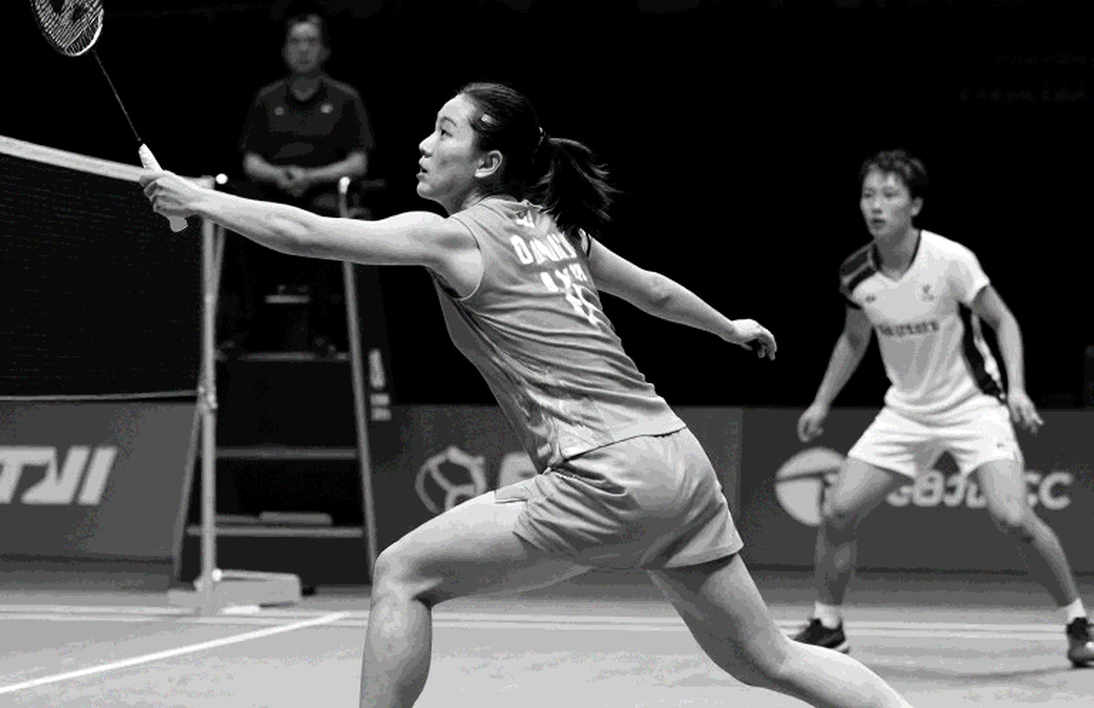
Between two points in the girls' U17 singles final at the 2026 Badminton Asia Junior Championships in Chengdu, there is a short silence that crowds usually ignore. The player wipes her face with her sleeve, picks up the racket, takes a breath, tosses the shuttle. In a 15-point format, that silence is part of the match. At 21 points, a player has time to correct a mistake. At 15 points, a player only has time not to make one.
Tanvi Patri entered the final as the No. 2 seed in girls' U17 singles. She lost the opening game 11-15 to Shaina Manimuthu, the No. 6 seed, also from India. Then she won 15-10 and 15-12. The title went to India. That story can be told in three lines.
The rest of this piece is not a retelling. It asks a different question: what does this title actually say, and what does it not say.
A TOURNAMENT OUTSIDE THE BWF LADDER
The Badminton Asia U17 & U15 Junior Championships 2026 was held in Chengdu, China. It is a continental age-group championship organised by Badminton Asia, sitting outside the BWF World Tour ladder entirely. It is also not part of the Olympic qualification pathway. Its place in the system is as a development and talent-showcase stop for national associations, below the BWF World Junior Championships in prestige.
The most important structural feature is the word "Asia". Only players from the continent can enter. The entire U17 cohort from Europe and the Americas is excluded by definition. A continental title therefore cannot be read as "the world's best U17 player". That is a definitional limit, not a criticism.
On format, the scorelines across the event — 18-16, 15-13, 15-12, 15-11, 15-10, 15-9, 15-8 — indicate a 15-point rally-scored system per game, requiring a two-point lead at 14-all or a hard cap. This is a different system from the senior 21-point game. The difference is not small.
The event runs annually. In girls' U17, Diksha Sudhakar won in 2026. Tanvi Patri won in 2026. India has now retained the title for two consecutive years, and in 2026 placed two players in an all-Indian final. For a badminton nation not traditionally counted among the continent's dominant powers, that fact deserves more attention than the trophy itself.
A NOTE ON THE SOURCE
Before the technical analysis, one disclosure is necessary. The brief in hand is a short results item. It carries no outlet name, no byline, no direct quotes from player or coach, and no official reference from BWF or Badminton Asia. Every quantitative figure below is treated as single-source and unverified.
This is not meant to diminish Patri's win. In 2026, aged 17 and the only intern in a Nagoya sports newsroom, I once broadcast a high school 400m hurdler's time as 54.2 seconds when the actual result was 56.4. I caught the error eight minutes later, cross-checked three camera angles, and corrected it on air. The station received more than twenty complaint calls from parents and coaches. I cried in the bathroom that night and promised myself it would never happen again.
Since then I have not written a number without two independent sources. That habit is exactly why this brief makes me stop.
DO THE ARITHMETIC
The brief states Patri won the title with "10 games won, 3 lost" across "four played matches", excluding her bye. That is 13 games in four matches.
In a best-of-three format, one match contains a maximum of three games. Four matches contain a maximum of twelve. Thirteen exceeds the ceiling. To reach 13 games you need at least five matches. And the brief does list five opponents: Zhou Jing Li, Yu Ying Gui, Shizuku Kashio, Lin Heng Men and Shaina Manimuthu.
The discrepancy is small, but it is a signal. It suggests the writer copied results from somewhere without adding them up. That alone is reason to treat every remaining figure with caution, however specific it sounds.
THREE DECIDING GAMES AND THE PRICE OF THE 15-POINT FORMAT
The strongest technical signal is in the third games. Patri won all three of her deciders, by margins of two, four and three points: 18-16, 15-13, 15-12. In the final she lost game one 11-15 and then won the next two. That is a repeatable pattern of third-game conversion, not a single lucky escape.
What the number does not say matters too. In a 15-point game, a two-point run at 12-all effectively decides the game. The gap between winning and losing is compressed. A two-point margin in a 15-point decider is not measured in the same units as a two-point margin in a 21-point decider. Winning 18-16 is far less difficult than the scoreline feels.
This matters for a specific reason. In a 15-point system, the first three shots and the opening five points carry disproportionate weight. The premium on endurance and rally construction — the things that define elite badminton in the 21-point game — is compressed. A junior optimised for short-format play can shine here without owning the physical base needed for a 75-minute Super 500 semi-final.
I write this from a specific place. In 2026, during the pandemic, I wrote for the Tokyo Olympics with the stadium empty. In the men's 400m hurdles final I had to describe Karsten Warholm's world record of 45.94 and Rai Benjamin's 46.17 with no roar to lean on. I wrote about spikes on the track, about breathing, about the silence after the starting gun. The piece won an internal station award, but what I learned was larger: strip away the noise and you see the real structure of a performance. An empty stadium is the most honest mirror a competitor will ever face.
Applied here: the 15-point system is a compressed version of a badminton match. It exposes instinct in the moment. It hides endurance and tactical patience. Those two hidden things decide senior careers.
A PROFILE WITH TWO FACES
On the other side, in three or four played matches Patri surrendered at least one game. She lost 12-15 to Zhou Jing Li. She lost the opening game of the final 11-15. That profile describes an inconsistent starter rather than a wire-to-wire winner.
But the brief also records two straight-game wins: 15-9 and 15-12 against Shizuku Kashio, 15-8 and 15-8 against Lin Heng Men. When she finds rhythm, she closes cleanly. That argues against her being purely a grinder. With matches going the distance in her run, her ceiling and floor within the same week remain wide.
One alternative reading cannot be separated from scorelines alone: losing openers and then recovering may reflect a warm-up lag, or a deliberate feel-out plan in game one. From scores, the two are indistinguishable — and neither can be separated from a mental trait.
This is where much of the coverage deserves scrutiny. The phrase "immense mental strength" appears in the original item on the basis of one scoreline. Sports writers habitually attach that label to any three-game win. A 15-13 decider does not measure courage. It measures that a player scored more points at the moment points were needed. Those are not the same thing.
THE NO. 2 SEED, THE BYE, AND THE TRAP OF POSITION
Patri was seeded second and received a first-round bye. For junior-watch observers this is notable but should not be overread. In continental age-group events, seeding is assigned largely on prior regional results and national association nomination. It is a weak proxy for absolute level.
The overall picture — No. 2 seed, bye, three matches going to a decider — describes a top-four player in the field, not a runaway talent. That distinction matters. Many junior continental champions are misread in the second direction, then disappoint at senior level.
In the other direction, consider the No. 6 seed. Manimuthu reached the final from that position and nearly won. The seeding structure understated India's second entry. That is a depth signal for a nation, not a luck signal for an individual.
India's junior girls' pipeline is therefore the bigger story. Two consecutive U17 Asian titles. An all-Indian final. That implies at least two players in the same cohort capable of reaching a continental final. But the brief provides no national junior ranking, no other players' results, and no selection-policy detail. The internal-competition question can be posed, not quantified.
I have one other professional reference point here. In 2026, writing about the famous Japan-Belgium moment, what I recorded was not emotion but structure: fourteen seconds from Courtois's save to Chadli's winner, in three passes, with all three Japanese defenders pushing up simultaneously as time expired. The collapse was not a failure of will. It was a consequence of positioning. At a World Cup, the first fourteen seconds sing the tune for the whole match — and sometimes the last fourteen do as well.
Applied to India's junior squad: what matters is not Patri's trophy but how many Indian players of the same age reach continental semi-finals and finals. That is the metric with predictive power.
FOUR OPPONENTS FROM CHINA, TWO STRAIGHT-GAME WINS, ONE HOME HALL
Three of Patri's opponents were Chinese. Two were beaten in straight games. All of it happened on Chinese soil, in Chengdu.
Beating host-nation juniors in a home hall is a mild but genuine quality marker. Home advantage at junior level is not only noise. It is a familiar training hall, familiar officials, familiar stands, and spectators who know the opponent's name and call it in their own language. A 16-year-old handling that structure across several consecutive days is not nothing.
But this says nothing about how she handles non-Asian styles. European physical profiles, Danish height-and-power play, Spanish spin-oriented technique — no data allows assessment. The match against Japan's Kashio is the only non-Chinese test in the brief, and Kashio was beaten 15-9, 15-12.
THE CONTINENTAL LANDSCAPE AND INDIA'S PLACE
Read as an early indicator of the Asian women's landscape, the picture forms in three tiers. Tier one is China, with the largest U17 pool — three of four opponents were Chinese. Tier two is Japan and Korea, with structured corporate and school pipelines. Tier three is the emerging group, and India is separating itself from that group with two consecutive titles.
Other Asian women's programmes — Indonesia, Malaysia, Thailand — look relatively thin at this junior level on this evidence. But this is inference from a single, thinly sourced event. It is not a data-driven map.
WHAT THE COVERAGE GETS WRONG
Here is where my read diverges from the standard framing.
The standard framing turns a U17 continental title into a career milestone. That reading is convenient, but it blends two different scales of evidence. A junior continental title and a Super 300 title are not on the same plane. The brief also states Patri "added yet another title to her tally this year", implying a multi-title 2026-26 season. It gives no tiers and no dates. That omission is itself information: the source is a results brief, not reporting.
The second point cuts harder. If none of her titles are senior International Challenge or Series events, her medium-term trajectory is decided by something other than the Chengdu trophy. The single most predictive observable is her entry list at senior International Series and Challenge level over the next two seasons. Many junior continental champions never convert — not for lack of talent, but because they are not entered into senior events in the following 12 to 18 months. Absence from an entry list is a silent injury nobody reports.
The third point is institutional. The 15-point and 21-point systems coexist. An association that optimises juniors for short-format play may systematically under-prepare them for senior tour conditions, where a quarter-final can run 80 minutes and rally construction outweighs the winner. This is a federation-level concern, not a claim about any athlete.
And on timeline: a U17 in the 2026 cycle most plausibly sits in the 2032 Olympic development window rather than as a credible 2028 contender. No date of birth is supplied, so this is directional only.
I hold all of this cautiously for a professional reason. At the 2026 World Cup in Qatar, in the Argentina-France final, I was the only female commentator in the control room. On 60 minutes I noticed Didier Deschamps moving Mbappe into central areas and asked for that tactical moment to be highlighted. A colleague laughed and said women know nothing about tactics. Three minutes later Mbappe scored in the 80th, then the 81st, then completed his hat-trick in the 118th. I did not answer. I quietly noted the timestamps.
Since then, every analytical statement I make must rest on something verifiable. In Patri's case, very little is verifiable. That is not a remark about her. It is a remark about the source.
ONE FACT WORTH REMEMBERING
Of everything in the brief, the heaviest fact is not the three deciders, not the derived net point swing of plus 34 across 13 games, not the No. 2 seed's bye.
It is the all-Indian final. A No. 2 seed against a No. 6 seed. Two players from one country, in separate halves of the draw, meeting in the last match of a continental championship. If Badminton Asia applies same-association separation as standard practice, both reaching the final is structural, not coincidental. To make it happen, both had to win their halves outright.
That shifts the story from "an Indian girl won" to "a generation of Indian girls' players is ripening at the same time". The distance between those two sentences is large, and it is usually skipped because headlines belong to the winner of the last match.
If Asian junior trajectories hold their current rhythm, the 2026 all-Indian U17 final will be cited as the opening point of a national-team cycle rather than the memory of a single player. And the question I keep for myself is not how many more junior titles Patri will win. It is: over the next two seasons, how many Indian players from her cohort will appear on senior International Challenge entry lists — where there are no byes, no 15-point games, and nobody to protect them from the gap between potential and career. — Phan Ngoc, Nagoya

Cầu thủ liên quan
Bài đề xuất
Nguyen Tien Minh at 43: A Victory That Needs No Spotlight2026-09-09
Nguyen Tien Minh Wins Vietnam Open 2026 Qualifiers: Lessons for Vietnamese Badminton Players2026-09-09
Vietnam Open 2026: Aidil Sholeh, the Outsider, and Malaysian Badminton's 27-Month Drought2026-09-14
Nguyen Tien Minh at 43 still makes it through Vietnam Open 2026 qualifying: Prejudice is a red card never shown2026-09-09
Srikanth and Satwik-Chirag reach China Masters 2026 quarter-finals: India's bright spot lies in handling pressure2026-09-08
The Rear-Court Diagonal and Its Price: Decoding Elite Badminton's Post-Paris 2026 Knee Injury Cluster2026-09-10
Bài đề xuất
Srikanth and Satwik-Chirag reach China Masters 2026 quarter-finals: India's bright spot lies in handling pressure2026-09-08
Aidil Sholeh, Vietnam Open 2026 and Malaysian Men's Singles' 27-Month Title Drought2026-09-14
17-14, Then 20-22: The Final Points Did Not Belong to Thuy Linh2026-09-10
Satwik-Chirag Edge Past Astrup/Rasmussen in China Masters Quarterfinal: A Sign of Resurgence or Just a Flash?2026-09-08
Nguyen Tien Minh at 43 Advances Through Vietnam Open 2026 Qualifiers: A Victory for the Game Reader, Not the Age Chaser2026-09-09
Nguyen Tien Minh at 43 still makes it through Vietnam Open 2026 qualifying: Prejudice is a red card never shown2026-09-09
Bài đề xuất
Nguyen Tien Minh at 43: A Victory That Needs No Spotlight2026-09-09
The Gap Behind the Back Boundary: Vietnamese Badminton Seen From a Training Hall in Nagoya2026-09-13
Tanvi Patri wins the U17 Asian title in Chengdu: three deciders and the limits of an age-group medal2026-09-14
The Empty Data Sheet in Badminton Analysis: When an Analyst Must Say 'Not Enough Evidence'2026-09-13
Cannot create match analysis article due to lack of data2026-09-08
Nguyen Tien Minh at 43: A Vietnam Open 2026 Qualifier Win and the Limits of Data2026-09-13