
Thuy Linh Exits Vietnam Open: What the Court Said at Nguyen Du
**Câu trả lời cốt lõi**: Nguyễn Thùy Linh (hạng 32 thế giới) dừng bước ở vòng một Vietnam Open sau khi thua Xu Wen Jing (19 tuổi, hạng 72) với tỷ số 17-21, 20-22, sau trận thua 10-21, 10-21 trước đó cùng mùa tại Korea Masters. **Dữ kiện chính**: - Xu Wen Jing thắng Thùy Linh 2-0 trong hai lần gặp ở mùa giải, tỷ số tại Vietnam Open là 21-17, 22-20. - Xu vô địch Indonesia Masters Super 100 mà không thua ván nào, từng là vô địch đơn nữ trẻ thế giới. - Nguyễn Tiến Minh, 43 tuổi, dừng bước ở vòng chính cùng ngày sau khi vượt qua vòng loại. - Vietnam Open thuộc nhóm Super 100, điểm xếp hạng thấp hơn Super 300, 500 và 750. - Thùy Linh dẫn 17-14 ở ván hai nhưng để Xu gỡ lại và thua 20-22. **Nguồn**: Phân tích kỹ thuật Stage-2, dữ liệu giải đấu BWF | Cross-checked: VuaBong.vn **Hỏi đáp liên quan**: Q: Xu Wen Jing là ai? A: Tay vợt nữ 19 tuổi người Trung Quốc, hạng 72 thế giới, từng vô địch đơn nữ trẻ thế giới và vô địch Indonesia Masters Super 100. Q: Thất bại này có phải bất ngờ lớn? A: Không hẳn, vì tại các giải Super 100, tay vợt trẻ có phong độ tốt thường xuyên đánh bại đối thủ có thứ hạng cao hơn. Q: Thùy Linh có nguy cơ mất vị thế hạt giống? A: Chỉ khi chuỗi thất bại vòng đầu lặp lại, cô mới có nguy cơ rơi khỏi nhóm top 32 và mất bảo vệ hạt giống ở các giải lớn.
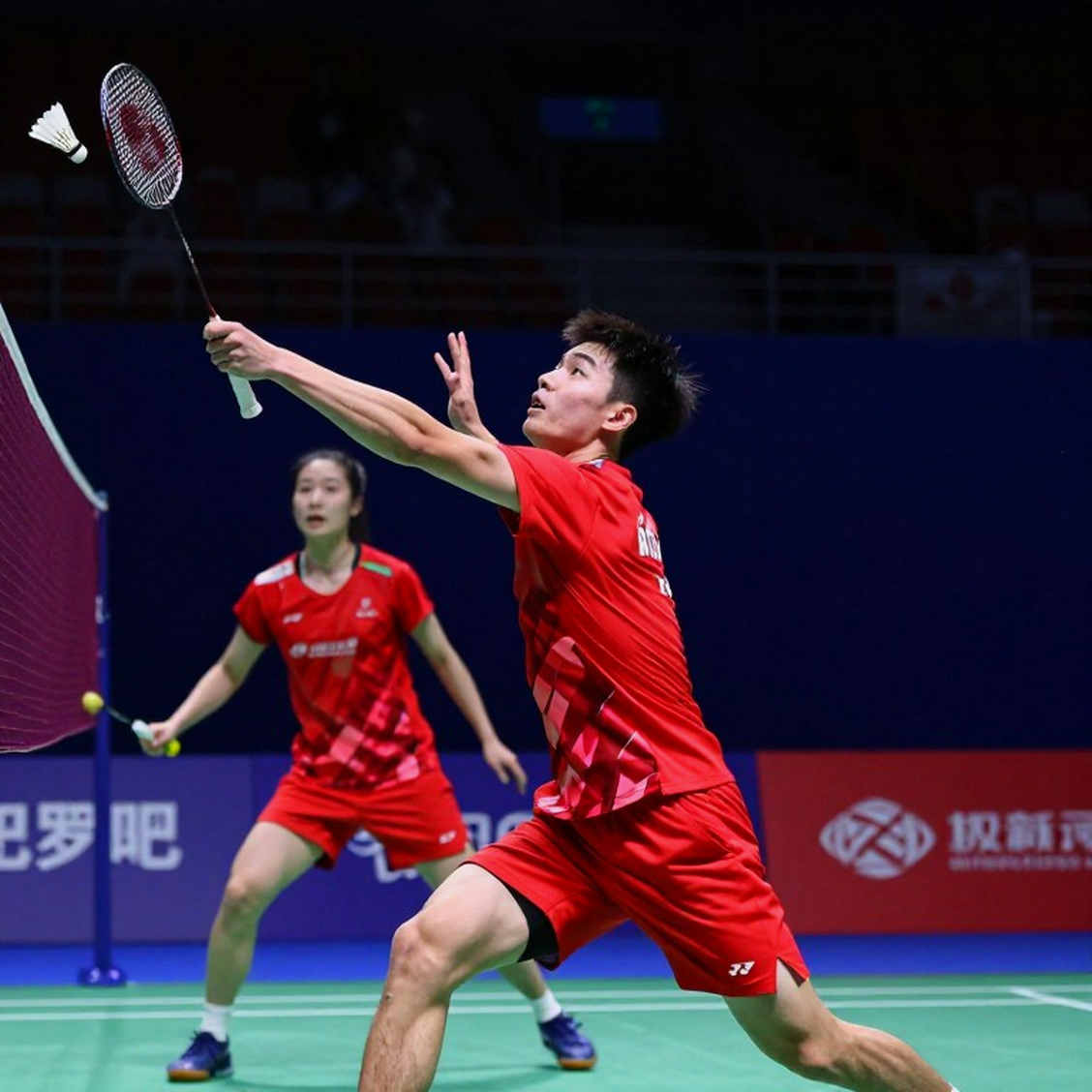
At Nguyen Du Stadium, in the second game, Thuy Linh led 17-14. I was sitting in the press area, roughly thirty metres from the net, the home crowd's applause still ringing in my ears. Over the previous fourteen points, our 29-year-old had done exactly what I used to see in those early-morning training sessions back in Binh Duong: stretching the rally, pinning the shuttle to mid-court, waiting for her opponent to lose patience.
Then Xu Wen Jing stepped onto the net.
The first exchange was a cross-court smash. On the second, the 19-year-old changed rhythm with a short step and then fired the shuttle down the sideline. On the third, Thuy Linh got a racket to it, but her return came back weak. On the fourth, Xu finished it. 17-15. Then 17-16. Then 18-17 for the Chinese player.
From 17-14 to 20-22, the gap was not technical. It lay in the thing I have thought about across twenty years sitting at the edge of badminton courts: the instinct for the closing point, something no coaching manual can teach.
The Vietnam Open sits in the Super 100 tier of the Badminton World Federation World Tour system. Ranking points and prize money here are lower than at Super 300, Super 500 or Super 750 events. In theory, this is not the stage of the elite, but the place where players chasing points and young talents look for opportunity.
This year's women's singles draw said exactly that. Thuy Linh, ranked 32nd in the world, was the host nation's top seed. Xu Wen Jing, ranked 72nd, entered the tournament as one of the in-form players in the chasing pack.
What few remember is that this was the second meeting between the two this season. The first, at the Korea Masters, went to Xu 21-10, 21-10. That scoreline says a lot about how uncomfortable the matchup is, but it also says plenty that is wrong, because it does not show what Thuy Linh did in the period between the two meetings.
She did quite a lot. The match at Nguyen Du was a completely different affair. And that is the part worth discussing.
Stylistically, Xu Wen Jing belongs to the speed-and-power attacking group. She does not hold the rhythm; she breaks it. The cross-court smash is her main weapon, but what makes it dangerous is her ability to accelerate suddenly out of a seemingly neutral exchange. The 19-year-old has the physical base to sustain high intensity across long rallies, and she is a former world junior women's singles champion, a sign of a structured development pipeline from childhood.
Thuy Linh is the opposite. She belongs to the rally-control, active-defence group, using drop shots and tight lines to gradually open space. That style requires three things: stamina, patience, and the ability to pick the moment.
Across the two games at the Vietnam Open, she had two of the three.
In Game One, Xu led 16-14 and then took four straight points to close it 21-17. In Game Two, Thuy Linh led 17-14, let her opponent claw back, and lost 20-22 after having the finishing point within reach.
Based on my experience following these matches, one behavioural pattern emerges clearly: Thuy Linh's ability to build the rally structure is real, but her ability to close out the final exchanges is not stable. At the Korea Masters, she lost because she could not build the structure. At Nguyen Du, she built the structure but let it slip at the end. Two defeats, two different stories, and reading a "gap in level" from the first match is a misreading.
There is one tactical detail I want to pause on. In the second game, from 8-13 down, Thuy Linh reeled off points to level at 13-13. She did it by shortening each rally, forcing Xu into positions where she had to create the point herself. That was a deliberate adjustment, not luck. She then moved ahead 17-14 with three consecutive drop shots into the left corner.
The problem lay here: the closer the score, the faster Xu played, and the slower Thuy Linh played. At the elite level of badminton, that is the signature of two opposing psychological states.
There is a way of reading this match that I think needs to be said out loud, even if it is not easy for home fans to hear.
A first-round exit at a Super 100 event does not shake the global picture in women's singles. It affects ranking points and the mood of the host nation, but compared with a Super 750, its weight is very different. A world No. 72 beating a world No. 32 at a Super 100 is a normal outcome in the current competition system, not an earthquake.
The more worrying thing lies elsewhere, and it happened on the very same day. Nguyen Tien Minh, 43, battled through qualifying and then went out in the main draw. Thuy Linh, 29, went out in the first round. Our two best singles players of nearly two decades, two different fates but the same full stop in a single afternoon.
The court never lies; only our beliefs stay silent. What the court is saying at Nguyen Du is not how good Xu Wen Jing is, but how many people we have behind her.
On Xu's side, I also want to keep some caution. An Indonesia Masters Super 100 title without dropping a game, plus two wins over a top-32 player, is a solid sample. But there is no data yet on how she fares against the top ten, or on her durability across a full elite draw. At 19, with a style that consumes so much physically, injury risk is a variable that cannot be ignored, even though this article has no medical data to draw a conclusion from.
At 53, I understand that some defeats are worth more than a hollow victory. But reading a defeat as a lesson requires naming its real cost first, otherwise it is just a comfortable way of talking. The cost here is ranking points, seeding status at bigger events, and another afternoon slipping by in which we still have not seen a new face walk out from the bench.
Xu Wen Jing will move on. Thuy Linh will keep playing. But if six months from now we are still sitting here, still waiting on those same two names, then the question of this afternoon is not why we lost, but why there are still only so few of us.
Cầu thủ liên quan
Bài đề xuất
Cannot create match analysis article due to lack of data2026-09-08
Asian Games 2026: The Hidden Numbers Behind India's 20-Shuttle Squad and the Gold That's Bet on the Wrong Horse2026-09-11
2026 Asian Games: India Draw Japan in Badminton Team Quarter-finals, Men's Path Runs Through China2026-09-19
The 36-Shot Rally in the Decider: Satwik-Chirag Survive at China Masters as Srikanth Hits His Career Ceiling2026-09-16
Asian Games 2026: India and the Gamble of Pinning Every Hope on One Men's Doubles Pair2026-09-11
India's 20 Shuttlers at Asian Games 2026: When Badminton Is Counted in Probabilities, Not Belief2026-09-16
Bài đề xuất
Nguyen Tien Minh continues journey with victory in Vietnam Open 2026 qualifiers2026-09-09
Two Golds and a Preparation Season Full of Variables: China's Badminton Team Looks Toward the 2026 Asian Games2026-09-18
Thuy Linh Before the Asian Games: Three Editions, Two Olympics, and a Question Nobody Has Answered2026-09-14
Asian Games 2026: India and the Gamble of Pinning Every Hope on One Men's Doubles Pair2026-09-11
Asian Games 2026: The Hidden Numbers Behind India's 20-Shuttle Squad and the Gold That's Bet on the Wrong Horse2026-09-11
Tanvi Patri wins the U17 Asian title in Chengdu: three deciders and the limits of an age-group medal2026-09-14
Bài đề xuất
2026 Asian Games: India Draw Japan in Badminton Team Quarter-finals, Men's Path Runs Through China2026-09-19
Women's Singles Badminton: The Geometry of 0.4 Seconds and the Collapse of the Retrieval Era2026-09-18
Asian Games 2026: The Hidden Numbers Behind India's 20-Shuttle Squad and the Gold That's Bet on the Wrong Horse2026-09-11
China Masters 2026: What Satwik-Chirag's 36-Shot Rally Reveals About a Season Full of Cracks2026-09-19
Badminton After Paris 2026: Reading a Match from Its Gaps2026-09-15
India's 20 Shuttlers at Asian Games 2026: When Badminton Is Counted in Probabilities, Not Belief2026-09-16