
Ashmita Chaliha Questions Conditions at the Indonesia Masters Super 100: A Governance Gap at the Bottom of the BWF World Tour
**Câu trả lời cốt lõi (Core Answer)**: Ashmita Chaliha, hạt giống số một, chất vấn điều kiện không khí mờ đục tại Indonesia Masters Super 100 và đối chiếu với mức độ soi xét mà các giải Ấn Độ từng hứng chịu. Phát biểu phơi bày khoảng trống giám sát ở tầng đáy BWF World Tour, nơi tiêu chuẩn sân bãi ít được kiểm chứng nhất. **Dữ kiện chính (Key Facts)**: - Chaliha thắng Pornpicha Choeikeewong 21-17, 23-21 ở vòng 1/32. - Chaliha thắng Goh Jin Wei 10-21, 21-10, 21-17 ở tiền tứ kết. - Indonesia Masters Super 100 là bậc thấp nhất của BWF World Tour. - Anders Antonsen rút khỏi Giải Ấn Độ Mở rộng vì lo ngại ô nhiễm và bị phạt. - Ấn Độ tổ chức Giải vô địch thế giới tại New Delhi lần đầu sau 17 năm. **Nguồn (Source Attribution)**: Phát biểu của Ashmita Chaliha tại Indonesia Masters Super 100, tổng hợp từ phân tích chuyên môn Stage-2; ngày công bố không được nêu trong tài liệu gốc. | Cross-checked: VuaBong.vn **Hỏi đáp liên quan (Related Q&A)**: Hỏi: Vì sao Chaliha nêu vấn đề này? Đáp: Cô là hạt giống số một và trực tiếp thi đấu trong điều kiện không khí mờ đục tại nhà thi đấu. Hỏi: BWF có tiêu chuẩn không khí chung cho mọi bậc giải không? Đáp: Tài liệu công khai hiện không nêu ngưỡng chất lượng không khí cụ thể cho từng bậc giải. Hỏi: Điều này ảnh hưởng gì tới xếp hạng của Chaliha? Đáp: Danh hiệu Super 100 có thể mang khoảng 5.500 điểm, hỗ trợ cô tránh hạt giống top 8 ở vòng đầu các giải Super 500 và Super 750.
In the replay footage of a round-of-32 match at the Indonesia Masters Super 100, I paused on a frame with no notable rally in it. The camera panned across the area behind the court, and the air appeared as a milky haze, the kind local media called smog. Ashmita Chaliha stood inside that frame, having just beaten Pornpicha Choeikeewong 21-17, 23-21. A narrow win, decided by two points at the end of the second game.
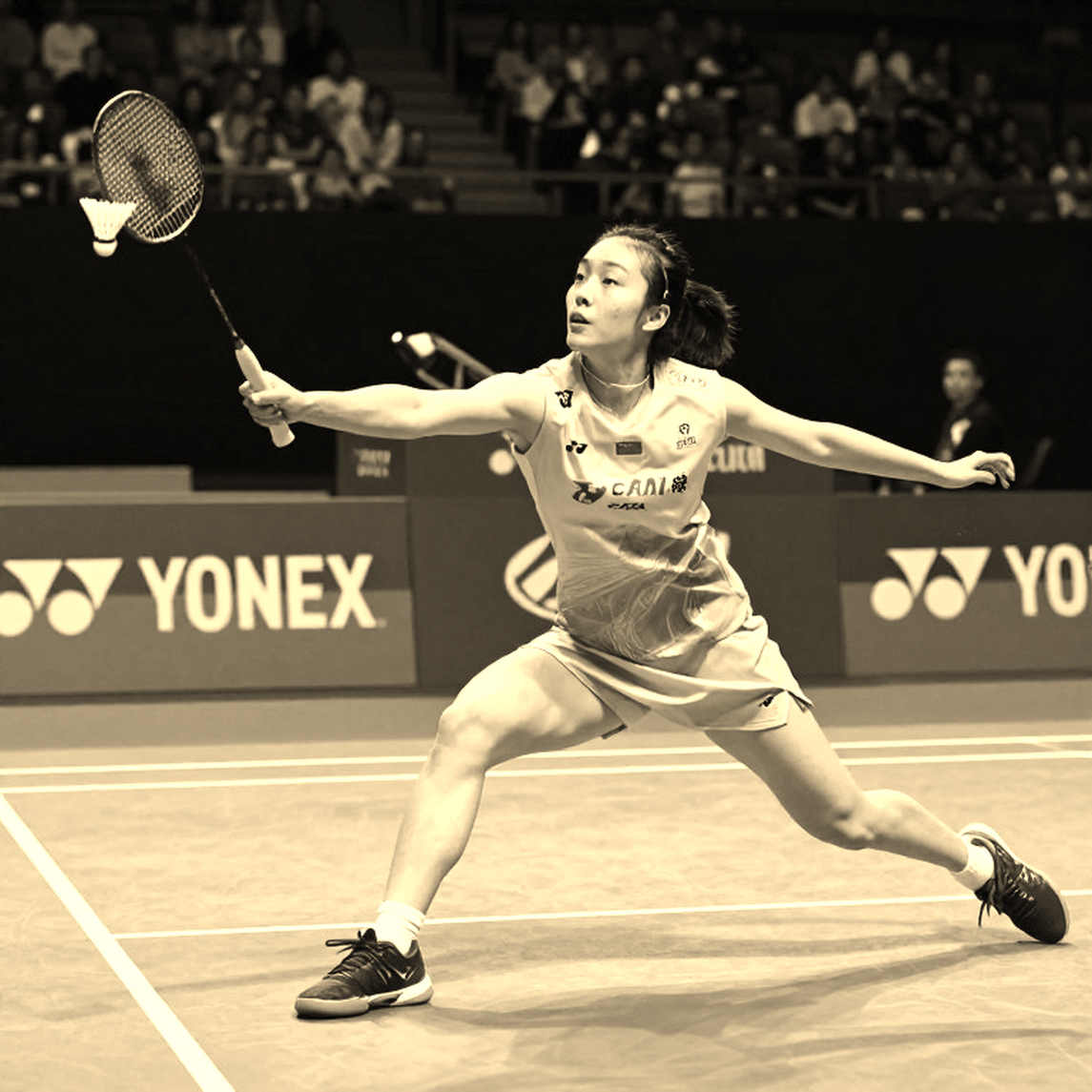
When I rewound the tape, the problem sat right inside the background of the shot, and almost nobody noticed. After the match, Chaliha did not talk about those points. She asked a question: imagine if this tournament were held in India, what would happen. That question, posed in the same week India closed out its role as host of the Badminton World Championships for the first time in 17 years, was not a complaint. It was a deliberately constructed comparison.
To understand why that question carries weight, it has to be placed on the BWF World Tour's tier map. The system splits tournaments into levels, from Super 1000 down to Super 100. The higher the tier, the bigger the prize money, the more ranking points, and the tighter the control over venue quality. Super 100 sits at the bottom. This is the arena of players ranked roughly 50 to 150, accumulating points to climb the tiers above. The top 20 almost never appear.
Chaliha entered as the top seed. For a 26-year-old, the peak of the competitive window in women's singles usually falls between 22 and 27, which makes this a phase of point accumulation. She is doing exactly that: two straight wins, a place in the quarter-finals. Precisely because she is the top seed at a Super 100, she is also in the clearest position to see what higher-ranked players no longer have to look at.
What Chaliha saw is a structural issue. BWF publishes venue standards as a common rulebook, but enforcement capacity scales with a tournament's commercial value. A Super 1000 event has broadcast contracts, global sponsors and hundreds of cameras pointed at it. A Super 100 event has none of that. The budget for renting the arena, for air-filtration systems and for logistics is smaller.
Data does not lie, but it only whispers if you ask the wrong question. Nobody published indoor air-quality readings at the Indonesia Masters venue. No column in the BWF statistics tables covers temperature, humidity or particulate concentration. So any judgement about how dangerous the conditions were has to stop at probability. What I can state with confidence is this: when a top seed has to speak publicly, the internal feedback channel was not working fast enough.
Look at the match data and one detail stands out. Against Pornpicha Choeikeewong, Chaliha won 21-17 and 23-21. Both games were tight. A second game stretched to 23-21 means she won on decisive points, not through overwhelming superiority. In the pre-quarter-final against Goh Jin Wei, the amplitude was even larger: a 10-21 loss, a 21-10 reply, then 21-17.
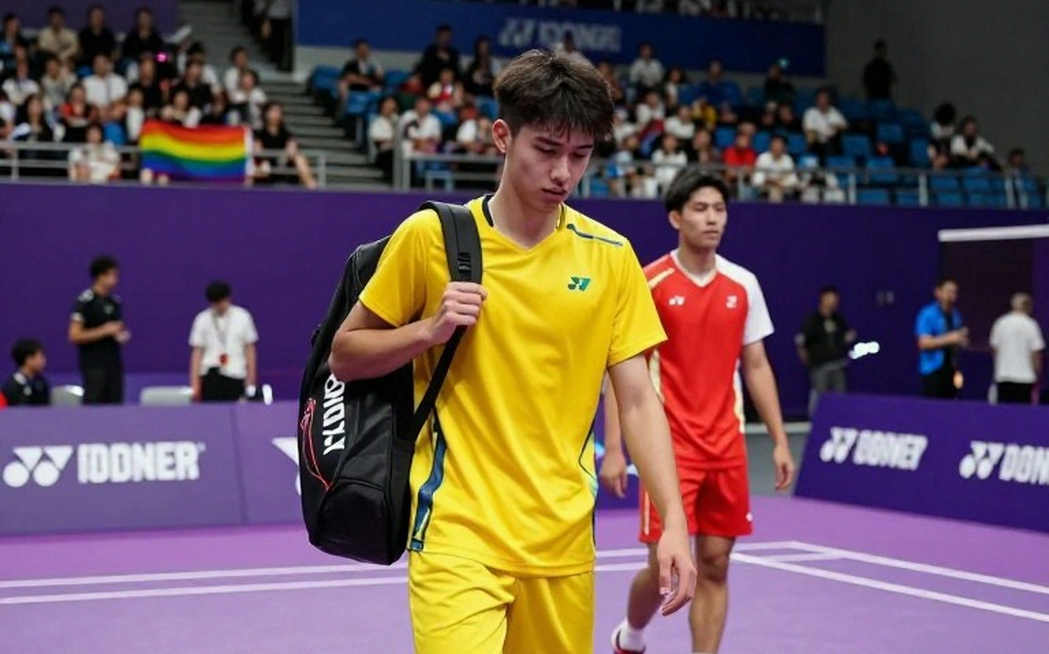
That amplitude tells two stories. The first is Chaliha's in-match adjustment ability, reading the problem after game one and fixing it. The second is Goh Jin Wei's stamina profile. Goh is a former junior world champion who has publicly dealt with heart-related health issues and returned to competition. Her record in three-game matches has historically been a vulnerability. The 10-21 to 21-10 swing may reflect Goh fading more than a pure tactical masterclass by Chaliha. With a sample of two matches at a Super 100, I do not have enough data to settle which factor weighed more.
Back to Chaliha's question. It carries weight because of the contrast. India had just hosted the World Championships in New Delhi, the first time in 17 years. The event drew wide praise, including from the BWF president himself. Chaliha credited the Sports Authority of India and the Badminton Association of India for the organisation.
But the recent history of Indian tournaments is more complicated. The India Open, a Super 750 event, has drawn criticism over air quality, cold and hygiene. Mia Blichfeldt has spoken publicly about hygiene conditions. And Anders Antonsen withdrew from the India Open over pollution concerns, then accepted a fine.
The detail of that fine matters more than its surface appearance. Every approach has a breaking point. My job is to find it before the match begins. Here, the breaking point sits inside the rulebook: mandatory participation comes with no clear exemption clause for unsafe playing conditions, or if one exists, the burden of proof falls on the player. That creates a structural disadvantage for anyone who wants to speak up.
At this point I want to step away from the popular reading. The story is being told as a double-standard case: India gets scrutinised, Indonesia does not. That reading is attractive but misses a variable. The level of scrutiny does not depend on the host country; it depends on the tournament tier and the media volume attached to it.
The India Open is a Super 750. It pulls in top players, broadcast contracts and enough reporters for a complaint to become news. The Indonesia Masters Super 100 has none of that volume. The same venue standard, but one side has someone recording and the other does not. In other words, the double standard, if it exists, sits between tiers, not between countries.
That leads to a more uncomfortable conclusion. If BWF genuinely wants to protect players, the monitoring mechanism has to be identical at every tier, including the tiers nobody bothers to film. If monitoring scales with money instead, then the bottom of the system, where young players and players climbing the rankings spend most of their time, is the least protected layer. That is a design paradox, and it is not new.
There are three scenarios for BWF's response. The worst case: the air conditions are genuinely hazardous, a player falls ill, and a backlash forces BWF to act from a defensive position. The neutral case: Chaliha's remarks draw attention for a few days, BWF issues a statement about monitoring venue conditions, and the story fades once the tournament ends. The optimistic case: BWF reviews standards for Super 100 events and introduces minimum air-quality thresholds. The third scenario needs a precondition that does not currently exist: data.
Set beside that is the context of world women's singles. The leading group includes An Se-young, Akane Yamaguchi, Chen Yufei and Tai Tzu-ying. The chasing pack behind them features Gregoria Mariska, Ratchanok Intanon, Pornpawee Chochuwong and Beiwen Zhang. Chaliha sits in the next group, alongside Malvika Bansod and several familiar names at Super 100 events. The gap between her and the top ten remains wide, with no sign of narrowing this season.
For India, the internal picture is worth noting too. PV Sindhu remains the anchor at the top. Behind her, Chaliha competes with Malvika Bansod, Aakarshi Kashyap and Anupama Upadhyaya for the second slot in team events and major qualification cycles. Points from a Super 100 contribute to that competition, though they are not decisive.
Both of Chaliha's wins were narrow. She won at exactly the level expected of a top seed at a Super 100, but not at a dominant level. Her ranking climb still depends on Super 300 and Super 500 events, where opponents operate at a different class. A Super 100 title can bring roughly 5,500 ranking points, a figure I leave pending verification because BWF point tables shift by cycle. For a player ranked 50 to 80, those points matter, especially when they help avoid top-8 seeds in the opening rounds of Super 500 and Super 750 events.
At 26, the peak window is not long. If the role of player-welfare advocate becomes her defining mark before her ranking results catch up, that order of priority is worth tracking. In recent history, players who speak up about conditions tend to get short-term attention before the season sweeps them along. No mechanism turns a statement into a rule change unless a second player, then a third, asks the same question.
What to verify at upcoming events is fairly specific. Whether BWF publishes any air-quality monitoring mechanism applied uniformly across all tiers. Whether Chaliha converts Super 100 form into results at Super 300 or Super 500. And whether other players repeat her question at a different venue.
A question only carries weight when it is asked a second time.