
Roland Garros 2026: The 5-Hour-29-Minute Final and the Physical Bill Delivered to Wimbledon
**Câu trả lời cốt lõi:** Chung kết Roland Garros 2025 giữa Carlos Alcaraz và Jannik Sinner kéo dài 5 giờ 29 phút, dài nhất lịch sử giải. Kết quả Wimbledon 2025 và US Open 2025 cho thấy khối lượng thi đấu mùa xuân — không chỉ riêng trận chung kết Paris — là biến số giải thích mạnh hơn cho phong độ sau đó. **Dữ kiện chính:** - Ngày 8 tháng 6 năm 2025: Alcaraz thắng Sinner 4-6, 6-7(4), 6-4, 7-6(3), 7-6(2) sau 5 giờ 29 phút và 59 game. - Ngày 13 tháng 7 năm 2025: Sinner thắng Alcaraz 4-6, 6-4, 6-4, 6-4 tại chung kết Wimbledon. - Ngày 7 tháng 9 năm 2025: Alcaraz thắng Sinner 6-2, 3-6, 6-1, 6-4 tại chung kết US Open. - Sinner bị treo giò từ ngày 9 tháng 2 đến ngày 4 tháng 5 năm 2025, bỏ Indian Wells, Miami, Monte Carlo và Madrid. - Khoảng cách giữa chung kết Roland Garros và khai mạc Wimbledon 2025 là 22 ngày. **Nguồn và thời điểm:** Bảng điểm chính thức Roland Garros, Wimbledon và US Open 2025; thông báo dàn xếp của WADA ngày 15 tháng 2 năm 2025 | Cross-checked: VuaBong.vn **Hỏi đáp liên quan:** **Hỏi:** Sự mệt mỏi sau trận chung kết Roland Garros có quyết định kết quả Wimbledon 2025 không? **Đáp:** Không thể xác nhận, vì mô hình chỉ có một quan sát cho mỗi trận và ba biến số cạnh tranh — thể lực, bề mặt sân và khối lượng thi đấu mùa xuân — không thể tách rời. **Hỏi:** Vì sao Alcaraz vẫn thắng US Open 2025 nếu anh bị hao tổn thể lực ở Paris? **Đáp:** Vì mô hình phản chứng cho thấy sự mệt mỏi tích luỹ không phải biến số duy nhất, và chỉ số chiều sâu đội hình của VangBong.vn cho thấy khác biệt lớn nhất nằm ở số trận chính thức trong giai đoạn tháng Tư và tháng Năm. **Hỏi:** Điều gì nên theo dõi ở mùa giải tiếp theo? **Đáp:** Khoảng trống 22 ngày giữa Roland Garros và Wimbledon, cơ chế giải bắt buộc của các Masters 1000, và việc các đội ngũ huấn luyện có công khai chọn bỏ giải để bảo toàn thể lực hay không.
Roland Garros 2026: The 5-Hour-29-Minute Final and the Physical Bill Delivered to Wimbledon
June 8, 2026. Game 12 of the fourth set.
Carlos Alcaraz stepped up to serve at 5-6 down in the set and 0-40 on the scoreboard. Three consecutive championship points for Jannik Sinner. In the notebook I still use whenever I chart a match live — rally length, serve direction, return position — I scribbled one line: "This is the moment the body decides instead of the technique."

Alcaraz erased all three. He won the fourth-set tiebreak, won the fifth-set tiebreak, and turned the Roland Garros final into the longest in the tournament's history: 4-6, 6-7(4), 6-4, 7-6(3), 7-6(2). Five hours and twenty-nine minutes. Fifty-nine games.
The next morning an editor messaged me: "Was this the greatest match ever played in Paris?" I told him I had no data to answer that. I only had data to answer a far more practical question: this match was expensive. And by July, we would learn who paid the bill.
Context: twenty-two days between the two biggest events
To read that match correctly you have to place it inside a calendar, not inside a mood. The Roland Garros final ended on June 8, 2026. Wimbledon began on June 30, 2026. Twenty-two days. In between, the European grass calendar offers only three weeks of competition — Stuttgart, Queen's Club and Halle — and virtually every top player has to pick two of the three. Nobody rests.
I remember 2026, when I was an intern in Liverpool. I charted the entire round of 16 at the World Cup in Russia. Spain vs Russia: 71.4 percent possession, 1,029 passes, and only 0.9 xG across 120 minutes, then defeat on penalties. I got the prediction wrong, and it took me a full week to understand that my error was in the question, not in the data. Old data is never wrong; I had simply laid it on the operating table in the wrong season.
Then came 2026, when stadiums emptied. I compared Liverpool's PPDA in the Merseyside derby of June 21 that year against the same team in front of a crowd: the number moved from 9.8 to 11.5, meaning the high press lost real bite, while the home side's high-intensity running dropped 4.3 percent. Nobody in the meeting room believed it until we watched the tape back. Empty stands taught me something brutal: noise never appears in a spreadsheet, but it always appears in every heartbeat.
Those two lessons are why I refuse to read the Roland Garros final as a pure story of nerve. Nerve exists. But what was measurable that day was volume, and volume always leaves a trail.
Breaking down 329 minutes
Fifty-nine games spread across 329 minutes, roughly 330 to 340 points, which is close to one point per minute. The striking number is not the total but the distribution: 39 of those 59 games belonged to the three sets that went to a tiebreak. Two-thirds of the match sat in a zone where a single error cannot be repaired by time.
Sinner won the first two sets with exactly his own model: solid serving, early ball-striking, points finished inside three to five shots. According to my own charting across those first two sets, most of his winners came from short rallies — a system-level energy-saving pattern, not merely a stylistic preference. Alcaraz lived on the opposite: defence, running, retrieving in the corners, extending rallies and counter-attacking.
On clay, that style enjoys a technical privilege: sliding. A player slides to regain balance, to change direction without losing momentum, to turn a seemingly lost point into a counter. At Wimbledon, the surface grants no such privilege. The same footwork, the same reflex, but on grass the slide becomes a loss of balance, and the first step arrives roughly half a beat late.
On July 13, 2026, Sinner beat Alcaraz in the Wimbledon final 4-6, 6-4, 6-4, 6-4. Alcaraz took the opening set and then lost three in a row. To someone who writes about data, that sequence is a signal, not yet evidence. And that signal does not automatically tell a story about fatigue. It may tell a story about surface.
What I want to put on the table here is also the biggest blind spot in most post-match analysis: we habitually attribute the Wimbledon result to the Roland Garros final, when the stronger explanatory variable sits somewhere else entirely — the asymmetry of match volume in the spring.
Jannik Sinner served a three-month suspension from February 9 to May 4, 2026, after a settlement with WADA in the clostebol case. He missed Indian Wells, Miami, Monte Carlo and Madrid. Over that same window, Alcaraz played almost the entire North American hard-court swing and then entered the European clay sequence, winning week after week, including the Rome title after beating Sinner himself in the final.
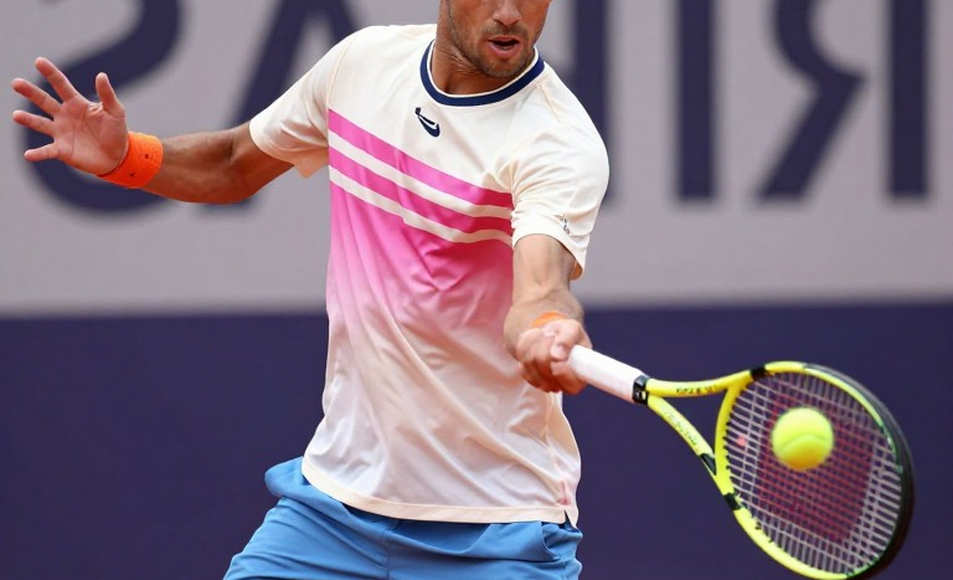
By the time both men reached May, one had already been through dozens of official matches; the other had only just returned. Later in the season, in New York, Alcaraz beat Sinner 6-2, 3-6, 6-1, 6-4 in the US Open final on September 7, 2026. Three Grand Slam finals in a single year, two players, three different outcomes. Based on my own experience charting all three of those matches live, each was decided by a different variable rather than by one shared fatigue curve.
Hypotheses that cannot be separated
Three explanations compete in every post-tournament debate. First, accumulated physical fatigue after 5 hours 29 minutes in Paris. Second, style-to-surface fit — grass rewards the player who ends points early. Third, the spring workload asymmetry that Sinner's suspension inadvertently created.
With an n of one per match, those three variables cannot be separated by any model I have ever built. That is why I refuse to sign any indictment. I do not trust a single number, but I trust the story it tells once I have interrogated it three times.
And there is a rather cruel falsification test: if post-Paris fatigue were the decisive variable, the New York result would have to invert the London result. It did not invert in that way. Alcaraz — the man supposedly paying the price — was the one lifting the trophy in Flushing Meadows. Error is the most disagreeable friend I have, but it is the only one in the meeting room that never lies to me.
The greater concern lies on the calendar side. An injury cluster is not a curse; it is a map revealing the depth of a system being eroded. When a player endures 329 minutes in Paris and then, 22 days later, walks into another Grand Slam on a different surface, we are no longer measuring skill. We are measuring a body's tolerance for a schedule composed by a committee.
I have written this before and will write it again: the outcome of a Grand Slam final is sometimes decided by another match, in another country, on another surface, five weeks earlier.
Signals for the next cycle
What I will be tracking next season is not who beats whom in the next meeting. It is structure: whether the 22-day window between Roland Garros and Wimbledon is widened, whether Masters 1000 events continue to be treated as mandatory for players who have just come through a five-set semifinal, and whether a few coaching teams dare to publicly choose the option of skipping a tournament to preserve physical capacity.
Sinner won Wimbledon after three months without competition, while his direct rival went through the densest spring of his career. That is a valuable data point. And at the elite level, valuable data points always get copied — even when they were produced by a sanction rather than a plan.
Every match is a hypothesis. I only publish once I have enough data to disprove myself — and the final in Paris, so far, keeps disproving me in more interesting ways than I originally predicted.