
Lakshya Sen and the Golden Path at Asian Games 2026: A Map Drawn Before the Draw
**Trả lời cốt lõi:** Lakshya Sen được Khel Now vẽ con đường tới huy chương vàng đơn nam Asian Games 2026, nhưng chính dữ liệu đối đầu trong bài cho thấy anh thua hoặc vừa thua ở bốn trong năm trận được dự phóng. **Dữ kiện chính:** - Loh Kean Yew (Singapore, hạng 13): Sen dẫn 7–4 nhưng Loh thắng lần gần nhất tại Asia Team Championships tháng 2/2026. - Panitchaphon Teeratsakul (Thái Lan, hạng 17): hòa 1–1, Teeratsakul thắng thẳng hai ván ở tứ kết Indonesia Masters. - Jonatan Christie (Indonesia, hạng 1): dẫn Sen 4–3 trong đối đầu sự nghiệp. - Shi Yuqi (Trung Quốc, hạng 6): dẫn Sen 5–2; Sen thắng ở vòng 1 All England tháng 3/2026. - Kunlavut Vitidsarn (Thái Lan, hạng 3): dẫn Sen 8–5 qua 13 lần gặp. - Sen được miễn vòng đầu và vào thẳng vòng 32; Ấn Độ giành huy chương đồng nội dung đồng đội. **Nguồn:** Khel Now, bài dự phóng trước thềm Asian Games 2026 (Aichi–Nagoya, Nhật Bản) | Cross-checked: VuaBong.vn **Hỏi đáp liên quan:** - **Hỏi:** Lakshya Sen có được miễn vòng đầu ở Asian Games 2026 không? **Đáp:** Có, anh vào thẳng vòng 32 với tư cách hạt giống. - **Hỏi:** Ai dẫn đầu đối đầu giữa Lakshya Sen và Kunlavut Vitidsarn? **Đáp:** Vitidsarn dẫn 8–5 sau 13 lần chạm trán. - **Hỏi:** Kết quả Asian Games 2026 có được tính vào điểm xếp hạng BWF không? **Đáp:** Chưa xác minh; đây là dữ liệu cần kiểm chứng trước khi kết luận về động cơ xếp hạng.
Birmingham, first round of the All England, March 2026. Lakshya Sen stands across the net from Shi Yuqi. Nobody calls it a final, but anyone who follows Asian badminton understands: beating the world No. 6 at a Super 1000 event is the kind of result that comes along only a few times in a career. Sen wins. Four months later, that same Shi Yuqi appears on Sen's map — but this time in the semifinals of the Asian Games 2026, according to a projection piece by Khel Now.
I read that article twice. The first time to see what they drew. The second time to see what they hid.
And what I found was not in the list of names they printed. It was in what they left out: Sen's own current ranking. A long article about a player's "path to a gold medal," and not a single line about that player's ranking. That detail is more memorable than every name in the piece.
After 2026, I stopped trusting rumours; I trust the place the rumour is trying to cover up.
Context: a projection, not a report
Before dissecting it, one thing must be settled about genre. The Khel Now piece is a projected path, not a report of results. The bracket it describes has not been finalised — at multi-sport Games, the individual draw is typically made after the team event concludes. In other words, that entire "path" is drawn on paper, from assumption.
The Asian Games 2026 will be held in Aichi–Nagoya, Japan. It is a continental multi-sport Games governed by the Olympic Council of Asia (OCA), not a tournament within the BWF World Tour system. That distinction is not administrative trivia: it determines how points are awarded, how seeding works, how national associations enter players, and how a shuttler allocates energy across a season.
In men's singles, Khel Now builds Sen a route of five knockout matches, each against an opponent inside the continent's elite group:
| Round | Opponent | Nation | Ranking stated in article | Head-to-head | Last meeting | |---|---|---|---|---|---| | Round of 32 | Loh Kean Yew | Singapore | 13 | Sen leads 7–4 | Loh won, Asia Team Championships, February 2026 | | Round of 16 | Panitchaphon Teeratsakul | Thailand | 17 | Tied 1–1 | Teeratsakul won in straight games, Indonesia Masters quarter-final | | Quarter-final | Jonatan Christie | Indonesia | 1 | Christie leads 4–3 | Not stated | | Semi-final | Shi Yuqi | China | 6 | Shi leads 5–2 | Shi won in the team event; Sen won at the 2026 All England | | Final | Kunlavut Vitidsarn | Thailand | 3 | Vitidsarn leads 8–5 | Described as "closely contested battles" |
Sen receives a first-round bye and enters at the round of 32 as a seed. India took team bronze, including a semi-final against China.
That is all the raw material. And once I laid the raw material on the table, I realised this table was telling a different story from the headline.
Core: the head-to-head table read backwards
A common way to read projection pieces: look at the last name, see "Vitidsarn" or "Christie," and conclude this is a big path. I do it the other way. I read from the bottom up, from the numbers, ignoring the adjectives.
And the numbers produce this: across the five projected matches, Sen trails on head-to-head in three, is level in one but lost the most recent meeting, and leads in exactly one — the opener.
Put differently, even if everything unfolds exactly as the Indian outlet drew it, the single moment when the data stands with Sen is the moment he must survive first.
The opener: the only strength, and it is old
Loh Kean Yew is the only opponent Sen clearly leads, 7–4. It is a handsome number. But the article itself undermines it: Loh won the most recent meeting, at the Asia Team Championships in February 2026 — only months before the Games.
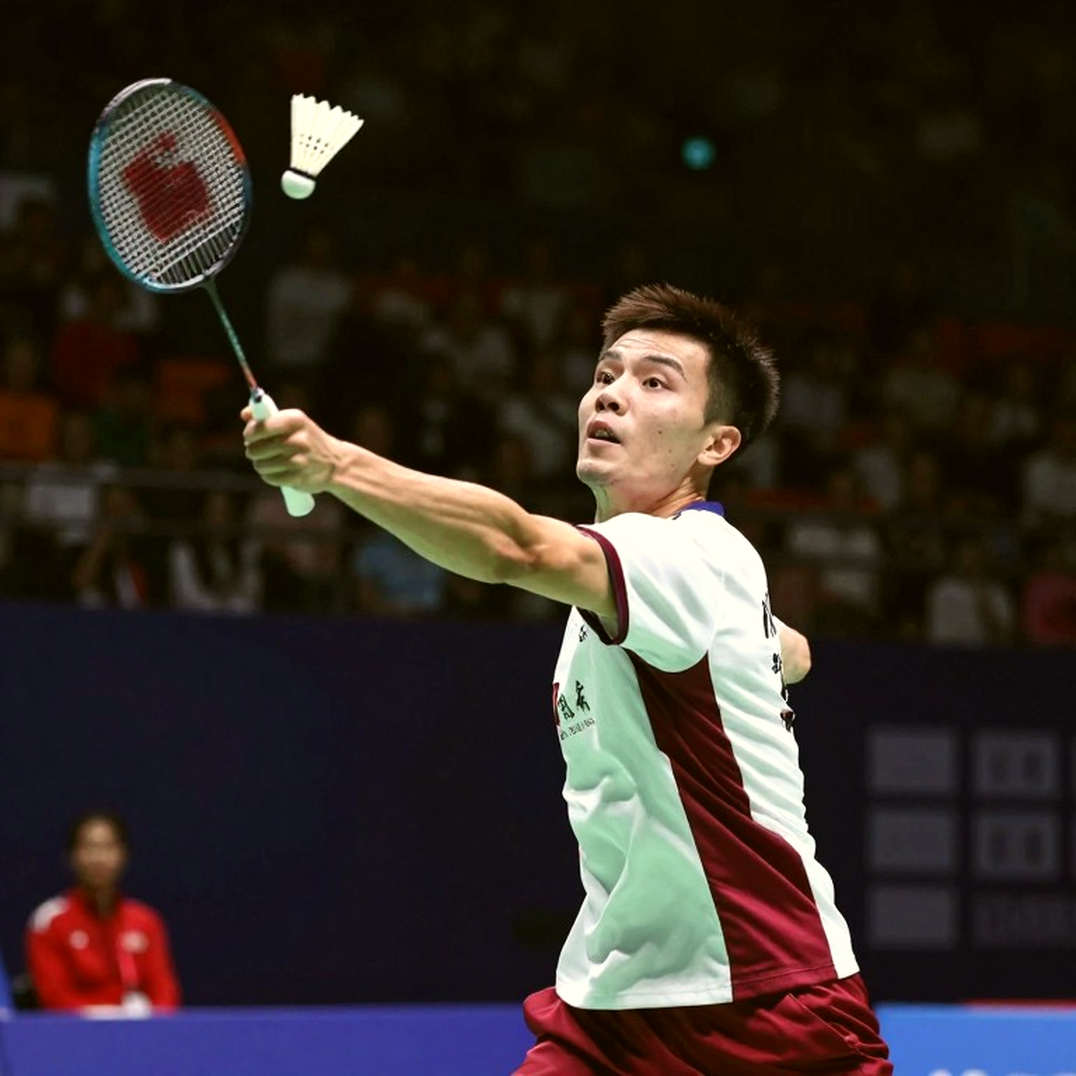
There is a principle I learned from years of writing about transfer markets and elite sport: when an article must reach for the aggregate head-to-head to prove a belief, while the most recent number says the opposite, the aggregate is doing decorative work. It is old, it spans years of differing form, and it lumps matches from when Sen was young together with matches from when opponents had learned to read him.
With Loh — a player I have spent considerable time rewatching footage of, because his game is rare: not spectacular foot speed, but an extremely fast release — what changed was never talent. It was timing. The Loh of February 2026 was not better than the Loh of 2026. He picked his moments better.
This is the round Sen must win. No negotiation. Because if he loses, the entire map behind it becomes a joke, and that 7–4 record turns into evidence of something harsher: an Indian player who can win more matches across a career, yet loses exactly when people need him to win.
Round of 16: the wound is still fresh
Panitchaphon Teeratsakul, ranked 17, and this name matters more than a routine projection list would allow.
Head-to-head 1–1. But the most recent meeting was not level: Teeratsakul beat Sen in straight games in the Indonesia Masters quarter-final. Not three games. Not a dramatic tie-break. Straight games. For a player once in the Olympic medal conversation, being swept in two games by a No. 17 junior is the kind of fact that statistical tables tend to bury in a sub-clause.
That Teeratsakul sits in the round of 16 — the round where seeds are expected to "warm up" — is a paradox the projection never touches. On paper, the round of 16 is the easiest of the last four. In practice, according to the article's own data, it is the round where Sen is behind on recent results.
I note this as a warning to myself, because I have a habit of reading the later rounds more carefully than the early ones. The knockout format punishes exactly that kind of complacency.
Quarter-final: the tempo test
Jonatan Christie, ranked 1, leads Sen 4–3. This is the tightest figure in the whole table — and to my mind, the most misleading.
Christie belongs to the group of players whose power lies not in force but in rhythm control. Deceptive net play, cross-court cuts that change direction, and above all the ability to drag opponents into long rallies with no clear ending — these are weapons a scoreline cannot measure. Christie does not beat you with a smash. He lets you beat yourself in the third game.
The Khel Now projection contains one rare technical sentence: Sen must "disrupt Christie's rhythm and maintain his intensity." I have to be honest: that sentence applies to every opponent in the top 20, every round, every tournament, every decade. It is not analysis. It is a placeholder.
A 4–3 record against the continent's top seed is genuinely respectable. But it also means both men know each other so well that the match will be decided by something outside the table — composure at the decisive points. And that is precisely the area this projection never mentions, despite devoting four paragraphs to the opponents he will meet.
Semi-final and final: two faces of one problem
Shi Yuqi leads Sen 5–2. For a world No. 6, that ratio almost matches seeding expectations. But one data point complicates it: Sen beat Shi in the first round of the 2026 All England.
The two most recent meetings read as two opposing messages. Shi won in the Asian Games team event. Sen won at a Super 1000, in the first round. If you want to believe in the semi-final, you cite the All England. If you want to argue against, you cite the 5–2 and the team event.
What I want to put on the table is not which result is more credible, but the psychology of a match you have won yet are still rated below. That is the kind of match where the memory of victory makes you careless.
Then Vitidsarn. Ranked 3, leading 8–5, with the article describing their meetings as "closely contested battles."
I read the number 8–5 and think of something else: it means Sen has played Vitidsarn often enough to lose often enough. Thirteen meetings. That is not a normal rivalry; it is a relationship stretching across multiple form cycles for both men.
And stylistically, this is a structurally counter-matched pair. Sen attacks, comes to the net, seeks the finishing point. Vitidsarn defends and counter-attacks, retrieves, survives on patience and error control. In that kind of matchup, the player who tolerates long rallies and makes fewer errors wins. An 8–5 record leans toward the more patient man. That is a signal about style, not about talent.
In a match between an attacker and a retriever, the head-to-head is always an indicator of who endures better, not who is better.
Contrarian angle: what the map does not draw
Summer is a market of promises; people buy promises because they cannot afford the truth.
The "path to gold" format has an easily recognisable mechanism: it sells a route, not a forecast. A route is always neutral on probability — you simply draw the road; whether you can walk it is your problem. That is why the format survives: it is never wrong when its assumption collapses, because it never asserted anything.
But four things that should appear in such an article are entirely absent.
First, Sen's own ranking. Not stated. This is the most serious gap. Without Sen's ranking you cannot infer his seeding, cannot infer which half he might fall into, cannot calculate points-defence pressure, cannot know whether he is peaking or declining. An analysis of a path without a starting point is not analysis; it is illustration.
Second, physical condition after the team event. India reached the team semi-finals, meaning Sen played at least one significant knockout tie before the individual event began. The article mentions this exactly once, and frames it optimistically: Sen gets "extra rest to regroup." I do not buy that reading. This is two consecutive events on the same body within the same Games. It is not rest. It is accumulation. From experience watching multi-sport Games, I have noticed that players who go deep in the team event usually pay for it in the individual event in the third games — where a 5% fitness gap becomes a 100% difference in outcome.
Third, the question of BWF ranking points. The Asian Games is an OCA event, not a World Tour stop. Whether results there count toward the world rankings determines both motivation and the seeding consequences for the entire season. I have no verified source for this, and I flag it as data pending verification rather than answering it myself. But the fact that a long projection piece never raises it suggests the article was built on cheerleading logic rather than competitive logic.
Fourth, the technical and medical staff. Not a single coach is named. Not a line about the coaching team, video analysis, recovery planning, or physiotherapy staff. For a player who must play five knockout matches in about a week after just playing a team event, this is not a footnote. It is the central variable.
There is a different way of looking at this whole story that I find more useful: Sen's head-to-head record paints a player who is competitive with the top 20 but historically second-best against the top six. That is a portrait with real value. It is simply not the portrait of a gold-medal favourite. It is the portrait of a spoiler.
And here is where I want to be blunt: the format itself is not professionally wrong. It is the product of a content market hungry for a home-grown hero. The error lies in readers mistaking a projection for a forecast. I have made exactly that mistake myself.
In 2026 I was wrong because I believed my emotions; now I am wrong because I do not believe — same fee either way.
Behind the map: a continental signal worth following longer
If you remove Sen from the centre and look at the whole Asian men's singles picture, there is a detail the projection inadvertently reveals, and it matters more than the outcome of any single round.
Thailand appears twice on the list: Vitidsarn at No. 3, Teeratsakul at No. 17. Indonesia appears once, at the very top. China once. Singapore once. India — a nation with a huge population and heavy badminton investment — has nobody in that leading group apart from Sen.
That is the structure of a badminton nation dependent on a single point. When a country's hopes rest on one player, every analysis of that player automatically becomes an analysis of pressure rather than of technique. And pressure has no index.
On the Thai side, a badminton nation long famous for doubles and for its women's players, having two men inside the continental top group is a signal about pipeline depth. It does not promise medals now. It promises a decade.
And this is where I must mention Vietnamese badminton, because I set myself a rule: never abandon my primary sport whenever a bigger topic walks past.
That list contains no Vietnamese name. That is not news, and I do not intend it as a cheap pessimistic line. I raise it for a more specific reason: Vietnam's gap in men's singles is not about basic technique; it is about the density of high-quality matchups within a season. How many times in a season does a Vietnamese player face a top-20 opponent? Count it, and the problem stops being a lack of talent. The problem is a lack of trials.
Looking at Sen's route — five matches, five top-20 opponents, in one week — I see something training centres rarely say out loud: big opponents are not obstacles; they are part of the training programme. The nation with the most chances to meet the elite advances fastest.
Risk: when the prettiest road is the steepest
Putting it all together, the biggest risk in this scenario is not injury, not officiating, not the draw. The biggest risk is the structure of the road itself.
Five knockout matches. No group stage to correct errors. Every match a death door. Four of the five opponents either lead the head-to-head or won the last meeting. Add a team event that already spent physical capital beforehand. That is not the picture of a gold-medal favourite. That is the picture of a man who must win five matches in which history opposes him in four.
The second type of risk is less discussed: expectation risk. When a major outlet publishes a "path to gold" piece, it does not merely describe reality; it sets a benchmark by which the public measures it. If Sen reaches the semi-finals and stops — a very good result for a player behind on head-to-head in most rounds — the media narrative will not call it an achievement. It will call it a failure. This is a trap both writer and reader construct together, and neither accepts a share of the blame.
The third, systemic risk: the multi-sport Games schedule. Team event first, individual second. This is regulation, not choice. A player cannot refuse a team call-up if his nation summons him, nor postpone his individual schedule. When the competition structure places two loads on one body without a buffer, the best preparation only reduces damage; it does not create advantage.
When a contract breaks, do not ask who was wrong; ask who was sitting in the director's chair.
Here, the director is the schedule and the draw. Not Sen.
What to watch next
After finishing any projection piece, I always settle a short list of things to observe — not to predict, but to know where I was wrong once it is over.
The real draw. Everything above rests on an assumed bracket. When the individual draw is made, the order of opponents can invert entirely, and the value of every head-to-head number changes with it. If Sen lands in a lighter half, the risk picture drops considerably. That is the largest variable, and the only one nobody can control.
Match duration. For a player who has already played the team event, the length of early wins is a more important fitness indicator than the scoreline. A three-game grind in the round of 32 is more worrying than a straight-games win. I will track that before the results.
Movement quality. This is what I learned from years of rewatching footage: declining form in badminton rarely shows up as obvious mishits. It shows up as a player arriving half a step late. Half a step does not appear on the scoreboard.
Sen's real ranking. I will cross-check against the official BWF rankings before trusting any figure in the projection, because every data point in it comes without a verifiable source.
And finally, one question I leave open, because it matters more than all the others: if Sen actually wins this title, having overcome four opponents history favoured, are we watching a hot week — or a genuine shift in class?
The difference between those two things is the entire meaning of this sport. And it is why I will stay up for the matches from the round of 32, not just the final.