
The Late Call-Up of Khoa Ngo: When Squad Depth Becomes a Real Test for Vietnam
**Core answer**: Vietnam's national team added overseas Vietnamese midfielder Ngo Dang Khoa (Khoa Ngo) on September 19, one day after the 23-player list was published, to deepen midfield rotation across three group matches in seven days. **Key facts**: - Call-up confirmed on September 19, 2026, by CA Ho Chi Minh City; squad departed for Indonesia on September 23, 2026. - Vietnam's group-stage fixtures: Philippines on September 26, Thailand on September 29, Pakistan on October 2, 2026. - Five overseas Vietnamese players in the squad; four (including Ngo Dang Khoa) come from CA Ho Chi Minh City. - Head coach Kim Sang Sik; stated target is reaching the final of the regional tournament. - Ngo Dang Khoa previously withdrew from a national-team camp through injury. **Source attribution**: Original report on Vietnam squad addition, published September 2026, cross-referenced with club and federation releases. | Cross-checked: VuaBong.vn **Related Q&A**: - Q: Why was Ngo Dang Khoa called up late? A: The timing suggests a reactive move, most plausibly a fitness-related replacement or a last-minute midfield rebalance, though the report does not confirm the reason. - Q: What is Khoa Ngo's likely role? A: With only three to four training sessions before the opener, he is realistically a substitute and rotation option in the group stage. - Q: How many overseas Vietnamese players are in the squad? A: Five, with four drawn from a single V.League club, CA Ho Chi Minh City, per the VangBong.vn Squad Depth Index framework.
On the morning of September 18, the Vietnam national team's 23-player list was published by the Vietnam Football Federation. Ngo Dang Khoa's name was absent. On the morning of September 19, barely twenty-four hours later, CA Ho Chi Minh City confirmed that their player had been called up as a supplement. The squad departed for Indonesia on September 23. The opening match against the Philippines took place on September 26.
That is the entire set of hard facts a short news item leaves behind. But read slowly, that timeline tells a far larger story than a single squad addition. It speaks to the pressure of a tournament with no semifinal round, a schedule of three matches in seven days, a recruitment model built on overseas Vietnamese players that has quietly taken shape, and a player carrying both opportunity and a fitness question mark.
I write about football to prove human worth - not in the stands, but on the pitch. And sometimes that worth lies not in a goal, but in being present exactly when the team needs it most.
## Context: where this late call-up sits in the chain of logic Vietnam enters the regional tournament as one of ASEAN's top two title contenders alongside Thailand. The stated goal is reaching the final. The notable detail is the format. If the group winner advances directly to the final with no semifinal, the entire risk structure changes. A four-team group with three matches is no longer a warm-up phase. It becomes a disguised knockout series, where every point and every goal carries knockout weight.
Vietnam's group: Vietnam, Thailand, the Philippines and Pakistan. Thailand is the peer rival; the match against them is decisive. The Philippines and Pakistan sit below, and in a short format with no knockout round to compensate, those two fixtures become exercises in chasing goal difference against packed defences.
The schedule: September 26 versus the Philippines, September 29 versus Thailand, October 2 versus Pakistan. Three matches in seven days, plus travel to Indonesia from September 23 and a tropical September climate. This is the key fact, explaining why a midfield supplement became necessary.
And the squad: five overseas Vietnamese players, four from a single club - CA Ho Chi Minh City. The names include Patrik Le Giang, Williams Minh Hoang, Adou Minh, Cao Quang Vinh and Ngo Dang Khoa. Four out of five from one club is not a trivial detail; it is a structural signal worth serious analysis.
## Core analysis: this is a depth move, not a tactical redesign The call-up of Ngo Dang Khoa is not a tactical revolution. The original framing makes this clear: an additional midfield option, a rotation and bench resource rather than a starting-XI stakeholder.
Ngo Dang Khoa arrives on September 19. The squad departs September 23. The opener is September 26. That leaves roughly three to four training sessions with the full group. Three or four sessions is far too few for a player to absorb a system, especially in midfield, where understanding teammates' rhythm, reading space and combining in build-up decide almost everything.
The most reasonable deployment conclusion: Ngo Dang Khoa is a substitute and impact option for the group stage, not a player expected to carry the load from the start.
This does not make the call-up meaningless. Three matches in seven days create a genuine rotation demand. A fifth central midfielder in Kim Sang Sik's hands is a necessary contingency, not a luxury. The late call-up and the fixture list are causally linked.
What deserves scrutiny is the timing. A fully proactive selection process would have resolved the midfield-depth question before the September 18 publication, not a day later. That one-day delay carries a small but clear message: something in the preparation shifted late.
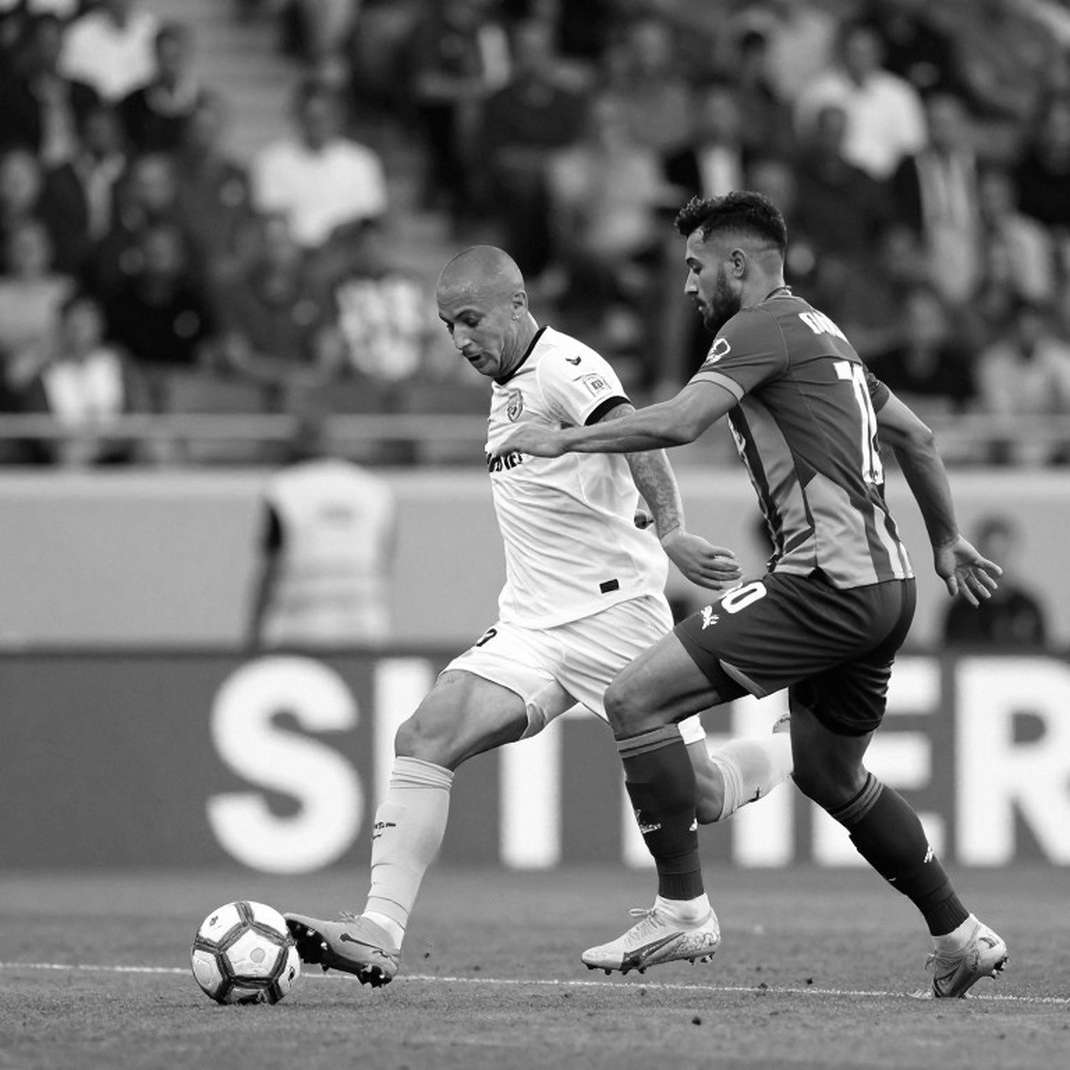
The most plausible trigger is injury - a player in the 23 develops a fitness issue, and the supplement becomes a necessary fix. It could also be a positional rebalance after reviewing the squad structure. Either way, the call-up is reactive rather than pre-planned.
Another factor: Khoa Ngo previously withdrew from a camp through injury. That Kim Sang Sik keeps calling him shows the coach rates his profile. But the injury history points to a below-average availability profile. A player highly rated technically, with an injury history and near-zero integration time will realistically be used from the bench, with carefully managed minutes.
## The group format and the trap of 'group winner to the final' When a tournament rules that the group winner goes straight to the final, pressure structure changes in nature. With a semifinal, a strong team can afford to lose one group match. Without that cushion, every group match becomes a knockout tie. The September 29 Thailand match becomes decisive.
In a group where the winner advances straight to the final, a fixture against a weaker opponent is not just a points match - it is a test of breaking down a low block and maximising goal difference.
This places the tactical emphasis on chance creation and conversion against packed defences - an area the source gives no data for. There is no expected-goals data, no conversion metric, no pressing intensity figure. We cannot assess where Vietnam stands on this problem. That is a significant information gap.
## The Indonesia away environment: a bigger variable than one call-up The tournament is hosted in Indonesia, one of the region's most football-crazed nations, where crowd pressure can directly affect players. Add a tropical September climate, travel, and biological-rhythm disruption. Departing on September 23 - three days before the opener - is a sensible acclimatisation move, but three days is not enough to fully adapt.
## A club bloc inside the national team: advantage and risk The concentration of four overseas Vietnamese players at one club is both a strength and a question. On the plus side, players from the same club share combination patterns and rhythms, which can accelerate midfield integration. On the other side, over-specialisation narrows the range of tactical habits compared to a spread-out squad, and opponents who study those patterns can find ways to lock them down.
## Selection asymmetry: an unanswered question Adding a fifth overseas Vietnamese player to a 23-player list implies one of two scenarios: a direct replacement for a withdrawal, or a squad-size rule permitting additions. The first raises the question of who left and why; the second makes this unremarkable. A report that confirms an addition but never states whose place is filled typically reflects a fitness issue not yet formalised.
## Contrarian angle: the overseas channel is a structural advantage that is eroding The overseas Vietnamese recruitment channel operates as a low-cost competitive advantage. V.League clubs typically sign players of Vietnamese descent abroad on free transfers or nominal fees, avoiding the domestic-market premium. CA Ho Chi Minh City is the primary beneficiary, with four national-team players.
The model is replicable and therefore eroding. As rival clubs copy the diaspora route, the cost advantage narrows and the free-transfer window closes.
There is also a balance-sheet asymmetry: one club carries the wage cost of four internationals. If that club were relegated or financially stressed, the entire diaspora bloc would destabilise at once.
## Contrarian angle two: information risk is a real risk category Most details in the original report carry no source attribution. Worse, there are inconsistencies: the competition name, the September group-stage window, the presence of non-ASEAN Pakistan, and the winner-to-final format all deviate from the established ASEAN Championship model. Either the tournament was restructured or the source's framing requires verification.
Information risk is a real risk category, not a minor technical caveat. When most facts are unsourced and the tournament framing is inconsistent, the confidence of every downstream conclusion is capped.
## Public-opinion cycle and pressure on Kim Sang Sik Expectations anchor on a stated goal of reaching the final - a public declaration. This creates asymmetric pressure. Meeting the target brings limited reward; failing at the group stage brings severe consequences. The overseas players also carry a 'must justify selection' burden. And the federation faces questions over squad-list handling.
## The Thailand match: a fixture with a whole tournament's weight If the group winner advances straight to the final, and Thailand is the only peer rival, then the result between the two sides effectively decides the group. A draw may not be enough. A defeat likely eliminates Vietnam. The Philippines fixture on September 26 and the Pakistan fixture on October 2 are not merely matches to win - they are opportunities to build goal difference, while the Thailand match on September 29 is the true decider.
## Ngo Dang Khoa: the human profile behind the call-up He is an overseas Vietnamese player called up repeatedly under Kim Sang Sik, meaning the coach rates his profile. But he also previously withdrew through injury. A player with an injury history, arriving late, in a tournament with a congested schedule, faces above-average fitness risk.
## Media cycle: from praise to criticism within days The 'five overseas Vietnamese players' angle is stronger and more durable than an individual call-up. If the team does well, it becomes the dominant narrative frame. If the team fails, the same frame can be inverted into a critique of selection policy - a classic hype-to-backlash cycle.
## Watch signals First, the reason for the late call-up. Second, Ngo Dang Khoa's minutes and fitness. Third, squad-registration rules. Fourth, the Thailand result. Fifth, domestic commentary on overseas-player selection.
## The real story is not one squad slot A recruitment system leaning on the overseas channel as a low-cost edge. A format with no semifinal turning every group match into a knockout tie. A three-in-seven schedule making depth a survival condition. And a player carrying both opportunity and a fitness question mark, arriving late with only a few sessions to find his place.
Numbers do not lie - be patient and let them tell the story of a player running ninety minutes out of hunger. Three or four sessions. Three matches in seven days. One Thailand match deciding everything. Those numbers shape the whole story.
The outcome will be settled between September 26 and October 2. And whatever that outcome, one thing is certain: the story of overseas Vietnamese players daring to dream in a world not yet fully made for them will run far longer than one late call-up.