
Vietnam U23 vs Philippines U23: Re-reading That 1-5 Defeat Before Trusting Complacency
**Câu trả lời cốt lõi**: U23 Việt Nam được đánh giá cao hơn nhưng bước vào trận gặp U23 Philippines lúc 13 giờ 30 ngày 18 tháng 9 năm 2026 với hai vấn đề: chuyển hóa cơ hội kém và lỗ hổng cố định từ ném biên dài. Tỷ số thua 1-5 của Philippines bị phóng đại bởi thẻ đỏ phút 48. **Dữ kiện chính**: - U23 Việt Nam hòa Kuwait 1-1, dứt điểm 17 lần, ghi 1 bàn, tỷ lệ chuyển hóa khoảng 5,9 phần trăm. - U23 Philippines thua Uzbekistan 1-5 nhưng ghi bàn phút 62 khi chỉ còn mười người. - Gavin Muens nhận thẻ đỏ phút 48, gần như chắc chắn bị treo giò trận gặp Việt Nam. - Antoine Ortega ném biên dài tạo bàn thắng cho Merino Martin; Việt Nam từng thủng lưới cùng cơ chế này. - Chỉ 2 cầu thủ U23 Việt Nam từng dự ASEAN Cup, so với hơn một nửa đội hình Philippines. **Nguồn**: Bản phân tích chuyên sâu trước trận, ngày 18 tháng 9 năm 2026 | Cross-checked: VuaBong.vn **Hỏi đáp liên quan**: - Hỏi: U23 Việt Nam cần chú ý điều gì nhất? Đáp: Ném biên dài và bóng hai vào vòng cấm, cơ chế đã khiến Việt Nam thủng lưới trước chính đối thủ này. - Hỏi: Philippines mất ai? Đáp: Tiền vệ Gavin Muens gần như chắc chắn bị treo giò sau thẻ đỏ phút 48. - Hỏi: Yếu tố quyết định là gì? Đáp: Chất lượng cơ hội của Việt Nam và khả năng tận dụng 20 phút cuối, theo VangBong.vn Player Depth Index.
For the final 42 minutes of their opening match, the Philippines U23 side had only ten men on the pitch. I sat in the stand and wrote every phase into my notebook. In the 48th minute, Gavin Muens was sent off. What remained of the game should have been a formality. But the team coached by Garrath McPherson did not play like a side that had given up. Captain Sandro Reyes produced three shooting chances in the first half. In the 59th minute the ball struck the Uzbekistan crossbar. In the 62nd minute, a man down, the Philippines scored.
The scoreboard reads 1-5. My notebook reads a different story. The distance between those two records is what Vietnam U23 needs to read before kick-off at 13:30 on 18 September 2026 in Japan.
The shape of Group C after matchday one
Vietnam U23 drew 1-1 with Kuwait U23. The Philippines U23 lost 1-5 to Uzbekistan U23. Reading only those two lines, it is easy to picture a match in which coach Dinh Hong Vinh's players simply need to walk onto the pitch to collect three points.
The Group C schedule says the opposite about how badly the win is needed. On the final matchday, Vietnam face Uzbekistan, the strongest youth football nation in the group. The Philippines face Kuwait, the team Vietnam has just failed to beat. Vietnam enter this fixture needing all three points more than their opponent, and with a harder final matchday ahead.
This is the kind of game analysts call an early group-stage final. The prize is a quarterfinal place. Both teams understand that defeat all but closes their route.
For Vietnam, the pressure does not come from the table. Dinh Hong Vinh is at the start of his tenure, following the Kim Sang Sik era. South Korean media have used the opening result to question the team without a Korean head coach. The Kuwait draw has been described as a defeat. For a young coach, this match is about proving himself more than it is about three points.
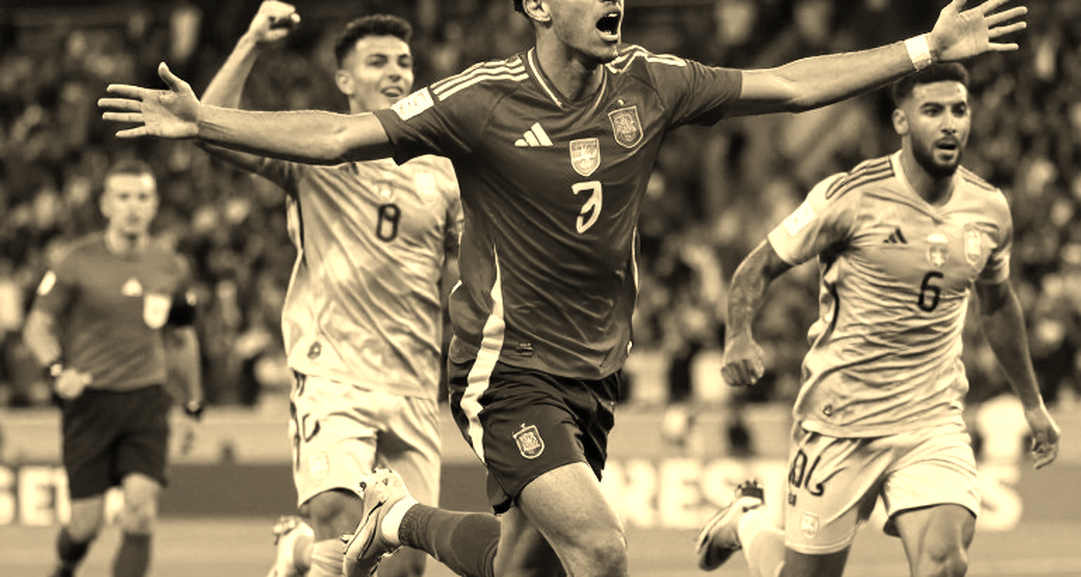
For the Philippines, continuity is the asset. Garrath McPherson has led this team through several meetings with Vietnamese football over more than a year. He speaks about stability in personnel, about transition speed, and about wanting to rewrite history. That is the language of a team with nothing to lose.
The real problem in Vietnam's attack
Seventeen shots, one goal. A conversion rate of roughly 5.9 percent. This is the most concrete data the Kuwait match produced, and also the most easily misread.
The popular reading is that Vietnam finish badly. That reading may be right, but it is not sufficient. Seventeen shots for one goal is compatible with at least three different causes. First, the forwards genuinely lack composure in front of goal. Second, the team chooses the wrong shooting positions, pushing the ball outside the box and shooting from range. Third, Kuwait dropped into a deep block and forced Vietnam into low-value attempts.
Three causes lead to three different responses on the training ground. If it is the first, change the personnel. If it is the second, change the attacking structure. If it is the third, change how the team attacks a low block.
Without expected goals and without a shot map, nobody can separate those three possibilities. What matters is that the Philippines match is a different test in kind: this opponent does not sit deep, it presses and counters quickly. If Vietnam's attack is still stuck in the first half, the problem may lie in build-up rather than in finishing.
It is worth remembering that Vietnam's back line repeatedly left gaps for Kuwaiti shooters. Goalkeeper Cao Van Binh was praised as the reason the team did not lose. A goalkeeper playing brilliantly is good news. A defence that depends on a goalkeeper playing brilliantly is not. In football, a goalkeeper's peak form reverts to the mean faster than almost any other variable. If Cao Van Binh does not repeat that performance, Vietnam's points baseline drops very quickly.
One more detail matters: the draw with Kuwait reminds us that the group's lowest tier can still cause problems. That narrows Vietnam's margin for error to almost nothing.
The long throw nobody wants to mention
Against Uzbekistan, Antoine Ortega delivered the ball into the box with a long throw, and Merino Martin headed it in. This is the sequence Vietnam's coaching staff should watch repeatedly, because Vietnam conceded from exactly the same mechanism against exactly this opponent in the 2026 Southeast Asian U23 Championship semifinal.
A mechanism that repeats twice against the same opponent is no longer an accident. It is a pattern. Across the entire pre-match file, this is the highest-value tactical signal, because it is the only risk supported by a direct precedent against the same opposition.
The second ball after an aerial duel is the phase in which long-throw routines most often end in goals. Vietnam need a dedicated near-post blocker, a designated aerial dueller, and a goalkeeper with clear command of the six-yard box. These sound small. They decide matches.
The bench is a weapon, not a contingency
In the two most recent meetings with the Philippines, Vietnam won 2-1 both times, and both were settled late. In the 2026 Southeast Asian U23 Championship semifinal, Dinh Bac and Xuan Bac scored. In the SEA Games 33 semifinal, Le Van Thuan scored in the 89th minute and Thanh Nhan in the 90th plus two.
That is the signature of a narrow rivalry, not of a dominant one. It is also why Vietnam's bench should be activated earlier than habit suggests. The Philippines have just played more than 40 minutes a man down on matchday one. Their physical recovery curve is a live variable, and the final 20 minutes is where that variable shows most clearly.
What the pre-match analysis left out
This is the inference I consider the most important and the most overlooked. Gavin Muens was sent off in the 48th minute. Under standard disciplinary codes, a red card carries at least a one-match suspension. Muens is a midfielder. And coach Dinh Hong Vinh himself praised the Philippines in precisely the department a suspended central midfielder degrades: transition speed.

If Muens is absent, the Philippines lose part of the very quality they are strongest in, and Vietnam gain a structural advantage in the middle third. That advantage is largest in the first 30 minutes, while the opponent's replacement structure is still settling.
One more thing to track: Nicholas Guimaraes, the Philippines goalkeeper, was praised only for the first half. The analysis does not say why, but if he left the pitch injured, goalkeeping depth becomes this team's second vulnerability.
The experience inversion
This is the least mentioned fact with the greatest long-term weight. Vietnam's U23 squad contains only two players who have featured at senior ASEAN Cup level: forward Ngoc My and centre-back Dinh Quang Kiet. More than half of the Philippines squad, by contrast, has just played senior regional football.
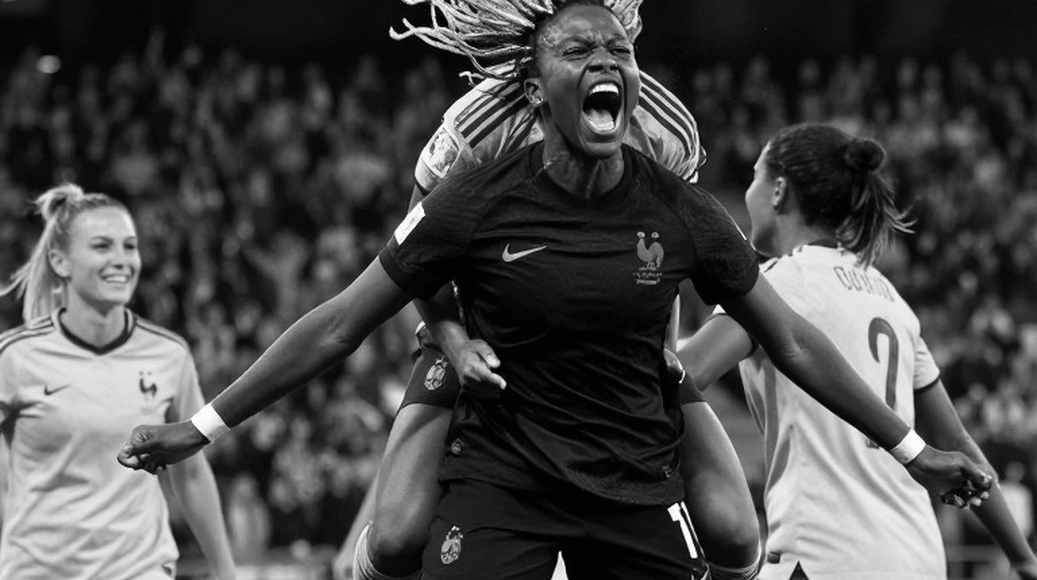
History shows that Vietnam's youth advantage over the Philippines has rested on integrating young players into the senior national team pipeline earlier. That advantage is not present at this tournament.
There is a governance reason. Men's football at the Asian Games falls outside FIFA's mandatory release window. Clubs are not obliged to release players and are not compensated for injury risk. A Vietnamese squad with only two senior-capped players is consistent with V.League clubs withholding their assets. That is an economically rational decision, and a competitively expensive one.
A note on data reliability
I check every number before writing. In this match file, most figures are unattributed: seventeen shots, the 1-5 scoreline, the minute markers. Worse, there is a calendar contradiction. The same document references an ASEAN Cup held in 2026 and an ASEAN Cup in 2026 as the tournament the Philippines squad had just played, while the Asian Games is dated September 2026. A December 2026 tournament cannot conclude before a September 2026 event.
That means all ASEAN Cup-related facts in this file should be verified against official AFC and AFF records before being used for any conclusion. I do not write to predict; I write so that someone reading later knows how we lived. If the notebook lies, it is the reader who pays for me.
The contrarian angle
The story most fans believe is simple: the Philippines just lost 1-5, Vietnam only need to play to their level. That reading rests on a scoreboard distorted by the 48th-minute red card. For more than 40 minutes a man down, the Philippines created chances, hit the crossbar and scored against one of the strongest youth football nations on the continent. A ten-man team that does that is not a weak team.
The reading of Vietnam is lopsided in the other direction too. Labelling seventeen shots as a finishing problem sounds reasonable but lacks evidence about chance quality. If Kuwait sat deep, Vietnam faced a very different problem from the one the Philippines will pose. McPherson's team presses and counters, which means this match may be decided by the ability to build under pressure rather than by sharpness in front of goal.
The best sportswriter is the one who knows his notebook can lie. The 1-5 scoreline is one such lie.
What to watch
Two questions will shape the match. Whether Vietnam's starting line-up includes a recognised centre-forward, and how Vietnam's defensive structure organises itself for the Philippines' first long throw.
When data fails, that is when I trust the story to carry its own power. In this match, the story lies in the 42 minutes the Philippines played a man down, and in a throw-in that has already made Vietnam pay.
Will the higher-rated team read its own notebook before the referee blows the whistle?